• About

Regular Cavalry in the Civil War

Regular Cavalry in the Civil War

Tag Archives: Civil War

The Guns of Roselawn

14 Saturday Feb 2015

Posted by dccaughey in Roselawn Cemetery

≈ Leave a comment

Tags

Civil War, Colorado, Pueblo, Roselawn Cemetery

Roselawn Chronicles, part 2

Author’s note: The research for this post is not mine. It comes in its entirety from the inestimable Craig Swain, Civil War artillery expert extraordinaire. If you haven’t visited his blog at To The Sound of the Guns it is well worth a visit or ten. I don’t normally post about artillery, but after mentioning them in the last post it would be rude not to follow up with the photos.

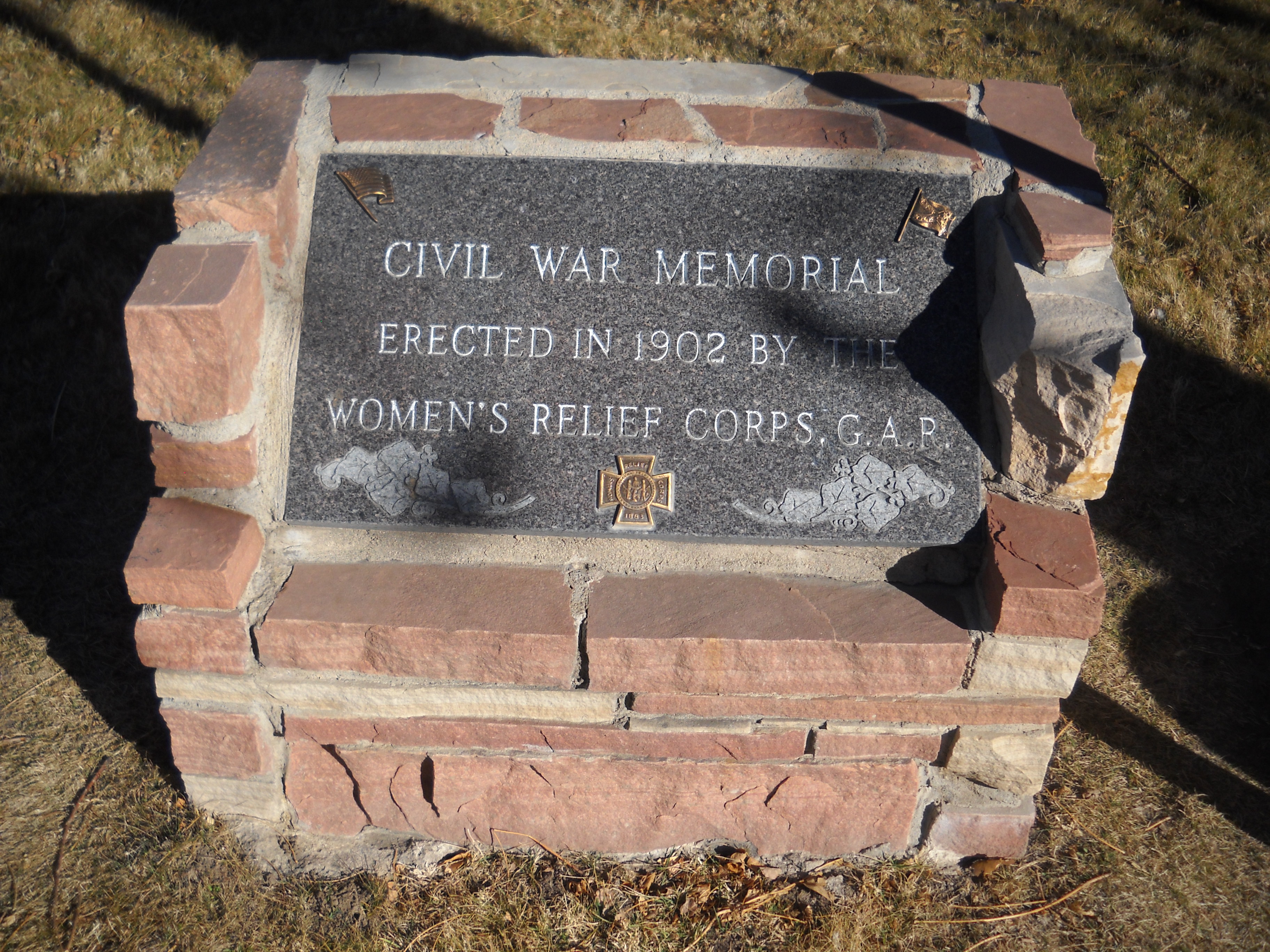
As one enters Roselawn Cemetery, there is a memorial to the left side of the entrance. The Civil War memorial was erected in 1902 by the Women’s Auxiliary of the Grand Army of the Republic. The woman who spearheaded this effort is buried a few dozen feet away next to her husband.

DSCN1948

DSCN1949
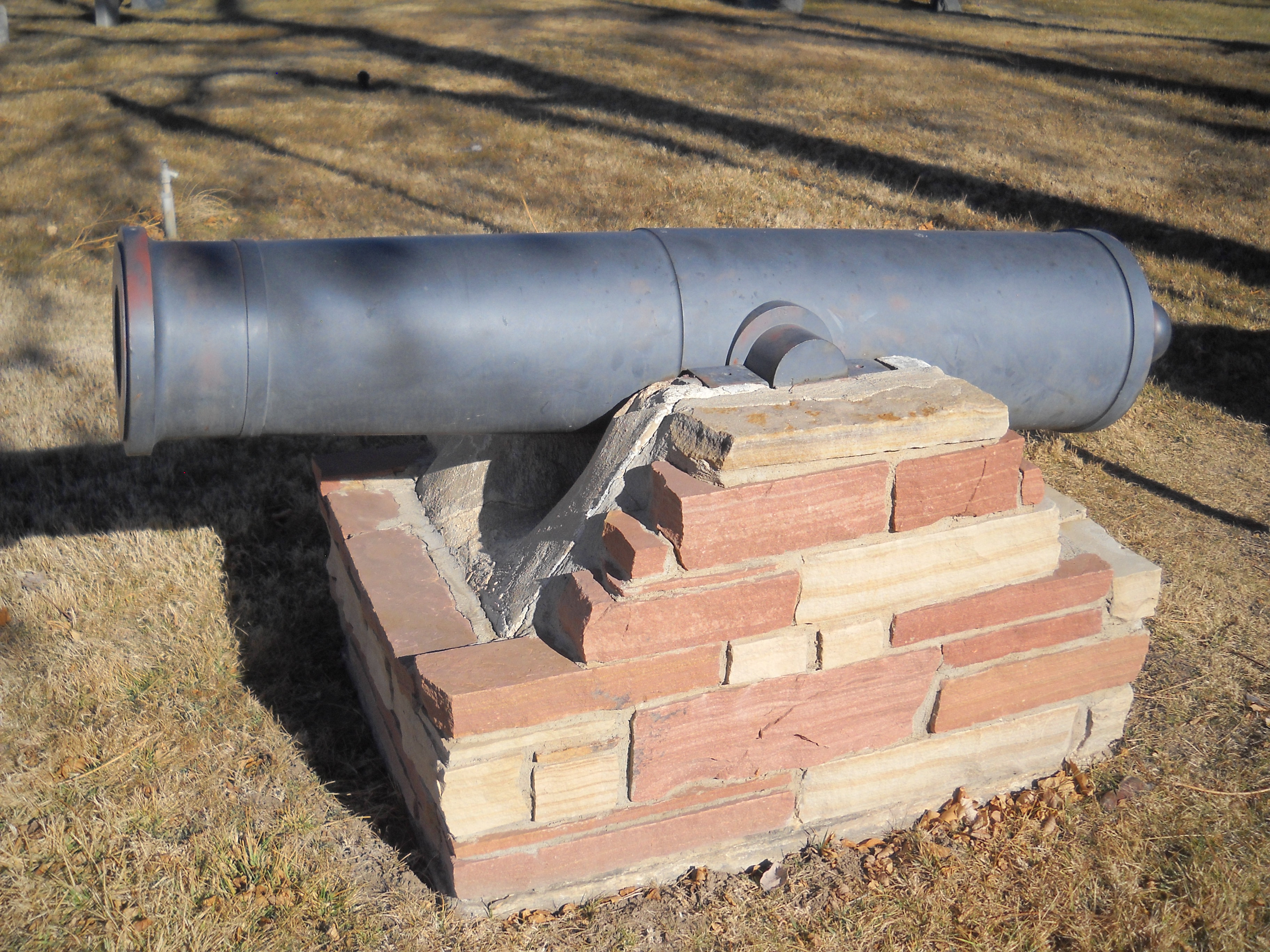
The two cannon are iron 24-pounder flank howitzers. They were not battlefield pieces, as they were too heavy. They were normally placed in the bastions of forts to cover the interior angles – the dead space near the walls not covered by cannon with longer range. They typically fired grapeshot and cannister across the moat of the fort to repel infantry assaults rather than dueling opposing artillery with solid shot.

Early in the war the Confederates tried placing them on field carriages and using them in the field, but the iron howitzers were simply too heavy to be easily used at roughly 1,500 pounds. The 12-pounder howitzer was frequently used in the field, as it was half of that weight and much more maneuverable.

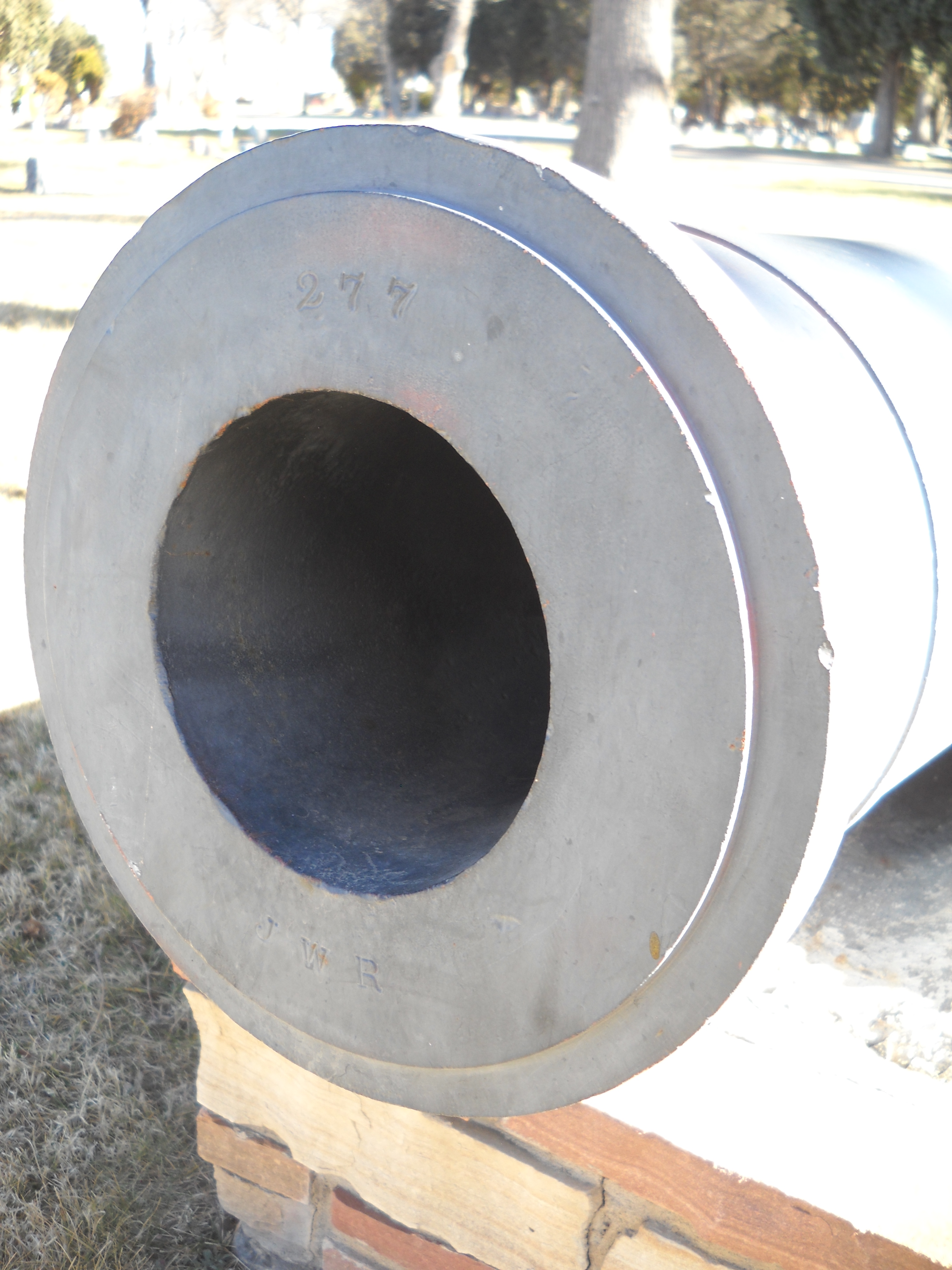
Both of these howitzers were cast at Cyrus Alger’s foundry in Boston, Massachusetts. The one on the right side of the photo was cast in 1847. Its registry number was 198, and it weighed 1,495 pounds. The left howitzer, registry number 277, was cast in 1849 and weighed 1,503 pounds.

The initials “J.W.R.” underneath the muzzles on both guns are those of the army ordnance officer who inspected it for quality, then-Major James Wolfe Ripley. He later achieved the rank of brigadier general and served as the army’s Chief of Ordnance for the first half of the Civil War. He was criticized during the war for being slow to adopt new technological innovations. On the other hand, Craig points out, he supervised a budget of $46 million at a time when ten cent cigars only cost a nickel.

The photos below are of the left howitzer, as an inconsiderate bird had defaced the muzzle of the one on the right side at the time of my visit.

LftSideCannon

LftSideMuzzle277JWR

LftSideRear1503

For more information on the 24-pounder flank howitzer, look here: https://markerhunter.wordpress.com/2009/11/04/24-pdr-flank-howitzers/

An Unexpected Find in Pueblo

09 Monday Feb 2015

Posted by dccaughey in 6th U.S. Cavalry, Roselawn Cemetery

≈ 3 Comments

Tags

102nd NY Infantry, 18th NY Cavalry, 6th U.S. Cavalry, 78th NY Infantry, Civil War, Colorado, Pueblo, Roselawn Cemetery

Roselawn Chronicles, part 1

“No kidding there I was…”

This is a slightly cleaned up version of how nearly every Army story I’ve ever heard starts, but in this case it happens to be true. I was in Pueblo with my wife last weekend to visit her great aunt. After lunch, they decided they wanted to stop by Roselawn Cemetery to look in on their relatives laid to rest there. As the family has been in town for several generations, rather a lot of them are buried there.

As we drove through the entrance to the cemetery, I saw two old cannon on the left side of the car. “Oh, that’s the Civil War section of the cemetery,” my wife’s great aunt said. I took note of the remark, but being a good husband I stayed with the group and we duly checked on various deceased family members.

On the way out I resolved to stop – just for a minute – and take a couple pictures of the cannon. I didn’t recognize them, and thought they might make an interesting question for Craig Swain over at To The Sound of the Guns. So I parked the car, hopped out, and strolled over to the cannon with my camera. I looked the cannon over, then spied an veteran’s headstone behind them. Curious, I walked over to it. It marked the grave of a former member of the 122d Illinois Infantry. That’s odd, I thought, that regiment was never anywhere near Colorado during the war. No one in the car was honking the horn yet, so I decided to look at a few more of the headstones.

My luck being what it is, two headstones later I came across a former member of the 6th U.S. Cavalry. It was nearly halfway into the earth, with the unit nearly obscured by the grass. First Sergeant Louis C. Hartman, Co. G, 6th U.S. Cavalry.

IMG_1496

“Why on earth is he here?” I wondered. In the course of our research for our book on the regiment during the Civil War, my co-author and I came across former members of the regiment buried all over the country. There’s even one in an unmarked grave in Cripple Creek who apparently died there as an old man during the gold rush, but Pueblo seemed an odd spot to find one. After the war the regiment served in Texas and later in Arizona against the Apache Indians, but to the best of my knowledge the unit never passed through Pueblo. I vaguely recalled a Hartman or two from our regimental roster, so I took a couple of pictures of the headstone and hurried back to the car.

“What did you find?” my wife asked.
“A guy from the 6th Cav,” I replied.
“Here? Really?”

I scribbled myself a note on one of my omnipresent 3×5 cards and resolved to look into the matter once we got home.
Louis was a bit more difficult about the matter than I expected. I checked the roster in our book, and discovered that while two Hartmans served in the regiment during the war neither was named Louis or assigned to Company G. A bit more searching revealed at least part of the man’s story.

Louis C. Hartman enlisted in Company C, 78th New York Infantry as a private on November 8, 1861. He was born in Berlin, Prussia in 1841, and worked as a clerk prior to his enlistment. Company C was one of three raised in New York City. They were originally intended to be part of the 1st Regiment, Eagle Brigade, but merged with the Lochiel Cameron Highlanders to become the 78th New York Infantry in New York City on April 26, 1862.

The regiment shipped out a few days later. After a brief stay in the defenses of Washington, they were assigned to Harpers Ferry. Its first major engagement was at Cedar Mountain, followed by Antietam, Chancellorsville and Gettysburg. It was transferred to Tennessee in October 1863, and fought in numerous engagements around Chattanooga that fall and winter. The following spring it fought under General Sherman in the advance on Atlanta at Resaca and around Kennesaw Mountain.

On July 12, 1864, due to depleted ranks, the 78th’s remaining soldiers were transferred to the 102nd New York Infantry, where they completed the remainder of their enlistments. They had nearly completed Sherman’s march to the sea when Hartman was discharged as a sergeant at the expiration of his enlistment on November 8, 1864.

Louis returned to New York City, but didn’t stay long. Despite a very impressive service record, he apparently had not yet seen enough of war. On December 1, 1864, he enlisted as a private in Company K, 18th New York Cavalry in New York City. His muster card describes him as 5’10” tall, with brown hair, brown eyes and a fair complexion. He joined the regiment in the field in Louisiana, and served there and in Texas until the company mustered out in Victoria, Texas on May 31, 1866.

Not until 1868 did Louis Hartman join the 6th U.S. Cavalry. He was enlisted into Company G by Captain Tullius C. Tupper, the regiment’s former sergeant major, on June 3, 1868 in New Orleans, Louisiana. With his wartime experience, it is not surprising that he rose quickly through the ranks and was the company’s first sergeant when his enlistment expired in 1873. He re-enlisted into the same company on June 10, 1873 at Fort Dodge, Kansas, and was still the first sergeant when his second tour expired in 1878. He re-enlisted in the company a third time at Camp Grant, Arizona Territory on June 10, 1878. He was discharged the following year by Special Order 277 of the Adjutant General’s Office. He was a sergeant vice the first sergeant, but his service was characterized as excellent so it was most likely not a disciplinary issue.

It isn’t clear what Louis did for the next several years, as the next time he surfaces is in 1884. He filed a pension claim as an invalid on January 2nd in Kansas. On June 30th, he joined Lewis Post No. 294 of the Grand Army of the Republic in Dodge City, Kansas. He claimed his service in the 78th New York as his basis for GAR membership, but listed the 78th New York, the 18th New York and 6th U.S. Cavalry on his pension application.
The following year Hartman moved to Pueblo, Colorado. According to the state census, he was boarding at the home of Benjamin Ott while working as a bookkeeper in Pueblo on June 1, 1885. He married soon after. I could not determine the date of his death, but his widow Lizzie submitted a pension claim on July 25, 1894.

Craig, I apologize. After seeing the headstone, I forgot all about the cannon, but I’ll get a picture when I return there later this week. This section of Roselawn Cemetery isn’t overly large, but I suspect there are more Civil War stories there.

Sources:

Carter, W.H. From Yorktown to Santiago with the Sixth U.S. Cavalry. Austin: State House Press, 1989.
Caughey, Donald C. and Jimmy J. Jones. The 6th United States Cavalry in the Civil War. Jefferson, NC: McFarland & Company, Inc., 2013.
Heitman, Francis B. Historical Register and Dictionary of the United States Army. Washington: Government Printing Office, 1903. Page 437.
Kansas G.A.R. Bound Post Records, 1866-1931, Lewis Post No. 294, June 30, 1884. Accessed on Ancestry.com on February 1, 2015.
National Archives, Record Group 94, Letters Received by the Office of the Adjutant General, 1861-1870.
National Archives, Record Group 94, Letters Received by the Commission Branch, 1863-1870.
National Archives, Record Group 94, U.S. Army Register of Enlistments, 1798-1914
National Archives, Record Group 94, U.S. Returns from Regular Army Non-infantry Regiments, 1821-1916: 6th U.S. Cavalry.
Phisterer, Frederick. New York in the War of the Rebellion, 3rd. ed. Albany; J.B. Lyon Company, 1912.

Research for Hire

02 Friday Jan 2015

Posted by dccaughey in research

≈ 2 Comments

Tags

Civil War, research for hire

Fair warning, this is a shameless plug for a new enterprise I am instituting this year. Those interested in research help can now visit the Research for Hire link at the top of this page.

Over the last several years, I have had many requests for research assistance. While I thoroughly enjoy investigating these leads and assisting people to learn of their ancestors or people of interest, the simple fact of the matter is that they delay the book projects on which I’m working. While some queries can be dealt with in an hour or two, several last year spread into multiple weeks.

Like most amateur historians, I pursue writing and research in my spare time. And no history writer I know has enough time for research. This is simply a means of financing my research and justifying the expenditure of my limited research time on your project. Since my ‘business’ only generates a book every two to three years at the best of times, it will also prove to my accountant and the tax folks that all of those research costs actually do occasionally result in income.

The process is fully controlled by the patron, and proceeds at their pace and direction. There are no hidden fees, and what I discover is available to the patron as I turn it up – no “I found more information but it will cost you another $50 to see it.”

Quest for a Quartermaster

02 Friday Jan 2015

Posted by dccaughey in 1863, 2nd/5th Cavalry, 5th U.S. Cavalry, 6th U.S. Cavalry, cavalry, officers

≈ 3 Comments

Tags

5th U.S. Cavalry, 6th U.S. Cavalry, Alfred Pleasonton, Army of the Potomac, Civil War, George Cram, John W. Spangler, Montgomery Meigs, quartermaster, Rufus Ingalls

This post is proof once again that initial looks can be deceiving. It started when I came across the letter below.

“Headquarters 6th U.S. Cavalry
Camp near Falmouth
January 30th 1863

General,
I have the honor to very respectfully request that the appointment of 1st Lieut. J.W. Spangler, 6th U.S. Cavalry as Regimental Quartermaster of the 6th U.S. Cavalry be revoked and his position on the Regimental staff of this regiment be vacated in consequence of his inability to perform the duties appertaining to it on account of his absence from his Regiment and the duties of his rank in it. Lieut. Spangler having accepted the position of Division Quartermaster on the staff of Brig. Gen. Pleasonton Comdg Cavalry Division. I also have the honor to very respectfully recommend that in the event of a favorable consideration of the above recommendation Lieut. John A. Irwin of the 6th U.S. Cavalry be appointed Regimental Quartermaster of the 6th U.S. Cavalry.
This regiment from recent recruitment is nearly full situated as it is at this season, it is not only a matter of justice to it but essential to the completion of its internal organization that it should have a Regimental Quartermaster present with it.
Trusting that the above recommendation, made from a sense of duty to my Command will receive the favorable consideration of the War Department.
I am Sir
Very Respectfully
Your Obt Servt
G.C. Cram
Capt 6th U.S. Cavalry
Commanding”

Kentucky-born Lieutenant John W. Spangler initially made a name for himself as an enlisted man with the 2nd (later 5th) U.S. Cavalry fighting Indians in Texas. He was commended in dispatches several times for gallantry in action, and was first sergeant of his company when the regiment left Texas at the outbreak of the war. Shortly thereafter he received a commission in the newly authorized 6th U.S. Cavalry.

My initial thought was that this was simply another example of Captain Cram whining, something which happened frequently in various letters during the first half of 1863. The 6th U.S. Cavalry’s picket line was over fifteen miles from its camp, and moving supplies for the regiment was a challenge even with an officer dedicated to it full time. Brigade and division staffs were pulled from regimental officers, and Captain Cram wanted his lieutenant back. A reasonable issue and request, but one common to many regiments. It would have helped Spangler as well, who was performing a captain’s duties or more for a lieutenant’s monthly pay.

The request, however, was endorsed recommending approval all the way up the chain of command. General Pleasonton wrote, “It is respectfully recommended that Lt Spangler receive the appointment of Captain in the Quartermaster Dept to fill the office of Division Quartermaster.” Most of Pleasonton’s responses to queries from Captain Cram that I have seen were somewhat less than positive. Even Army of the Potomac commander Major General Joseph Hooker’s endorsement read, “Respectfully forwarded to the Adjt General of the Army, approved.” Surprisingly, however, the request was not approved.

Lieutenant Spangler was relieved as regimental quartermaster for the 6th U.S. Cavalry on February 1, 1863. One of the companies was short an officer, but the regiment was able to assign an officer to attend to its logistical needs. And Captain Cram’s request was granted – that officer was Lieutenant John A. Irwin, another former first sergeant. Spangler remained on the regiment’s rolls, and continued to work as an acting assistant quartermaster in the Cavalry Corps through the end of the war.

Several months of hard campaigning later, the issue was still not resolved. It wasn’t simply a problem for the Cavalry Corps, but for quartermasters across the Army of the Potomac. In a letter to Quartermaster General Montgomery Meigs in August 1863, Army of the Potomac Chief Quartermaster Rufus Ingalls submitted a request for additional quartermaster officers. He submitted a list of “officers who have for a long time been doing duty in the QMaster Dept as Acting Asst QMasters. I respectfully request that the officers be appointed Asst QMasters Vols with the rank of Captain and be ordered to report to me for assignment to duty with this Army.” Among the officers listed was First Lieutenant J.W. Spangler, who was then working as an acting assistant quartermaster for the Cavalry Corps of the Army of the Potomac.

“I beg leave to call your special attention to Lt. J.W. Spangler 6th US Cavly now acting Chief QMaster Cavly Corps,” Ingalls continued. “Lt. Spangler has been acting in the QMaster Dept with the Cavalry during the Peninsula Campaign, and has been with this army since its return, serving with different commands in the Cavalry Corps. He is in my opinion one of the best officers in the service and I cheerfully recommend him for the appointment of an Asst QMaster in the regular army.” Despite this, once again the request was not approved.

There weren’t enough assistant quartermasters of volunteers in the various armies to support the various staffs. This does not appear to make sense. Quartermasters in the regular army were of course capped by the total number authorized by Congress for the army. These positions, if authorized, would continue in the army once the war was over, thus constituting a long term problem with army size and funding. Volunteer ranks, however, were authorized in support of volunteer formations, and lasted only as long as the position and formation lasted. The chief quartermaster of the Cavalry Corps, for example, would no longer be an authorized position once the Cavalry Corps disbanded. That individual would revert back to his regular army rank and position.

John Spangler served again as the regimental quartermaster for the 6th U.S. Cavalry after the war, from November 5, 1865 to July 28, 1866. He was paid as a lieutenant throughout the war, and was not promoted to captain and command of a company until July 28, 1866. Despite spending the majority of his commissioned career in the quartermaster field, he never did officially work in the quartermaster corps. The issue of additional authorized volunteer assistant quartermasters was not resolved.

Sources:

Arnold, James R. Jeff Davis’ Own. New York: John Wiley & Sons, Inc.: 2000.
Caughey, Donald C. and Jimmy J. Jones. The 6th United States Cavalry in the Civil War. Jefferson, NC: McFarland & Company, Inc., 2013.
Heitman, Francis B. Historical Register and Dictionary of the United States Army. Washington: Government Printing Office, 1903. Page 437.
National Archives, Record Group 94, Letters Received by the Office of the Adjutant General, 1861-1870.
National Archives, Record Group 94, Letters Received by the Commission Branch, 1863-1870.
National Archives, Record Group 94, U.S. Returns from Regular Army Non-infantry Regiments, 1821-1916: 6th U.S. Cavalry.
Price, George F. Across the Continent with the Fifth Cavalry. New York: D. Van Nostrand, Publisher, 1883.
Utley, Robert M. Frontiersmen in Blue. Lincoln: University of Nebraska Press, 1967.

Fiddler’s Green: Ephraim Adams

16 Sunday Nov 2014

Posted by dccaughey in 2nd U.S. Cavalry, battle of Cedar Creek, Fiddler's Green

≈ 1 Comment

Tags

2nd U.S. Cavalry, battle of Cedar Creek, cavalry, Civil War, enlisted men, Ephraim Adams, Shenandoah Valley campaign

I don’t often feature enlisted men in the Fiddler’s Green series, for the simple reason that there isn’t normally much information available about them. I found the case of Ephraim Adams somewhat unique, though. He literally grew up in his company, and held every enlisted rank in it before falling at its head in battle.

Ephraim Adams was born in Carlisle, Pennsylvania in late 1839. He was enlisted into Company F, 2nd U.S. Dragoons at Carlisle on December 24, 1855 by Lieutenant Tyler as a bugler at the age of 16. His enlistment documents describe him as 5’4″ tall, with gray eyes, brown hair and a fair complexion. He served his first enlistment on the frontier with his regiment, earning the rank of sergeant just before reenlisting in Company F at Fort Kearney, Nebraska Territory on September 20, 1860.

Ephraim continued to serve with his company through most of the Civil War, earning the rank of first sergeant by the time he reenlisted a second time. Lieutenant Robert Lennox, his former sergeant major, reenlisted him into Company F on July 12, 1864 at Light House Landing, Virginia, as the regiment recovered from Sheridan’s two raids. Due to heavy losses among the regiment’s officers, he was commanding his company when the regiment moved to the Shenandoah Valley in early September.

First Sergeant Adams was leading his company during the battle of Cedar Creek when he received a gunshot wound to the face on October 19, 1864. After initial treatment at a field hospital on the battlefield, he was admitted to the U.S. General Hospital at York, Pennsylvania on October 26th. He did not regain consciousness before he died there on November 1, 1864. According to the final statement signed by First Lieutenant James Cahill, a former fellow first sergeant, he was buried on November 3, 1864 in plot #130 at Prospect Hill Cemetery, York, Pennsylvania.

Fiddler’s Green: Lewis Thompson

03 Monday Nov 2014

Posted by dccaughey in 2nd U.S. Cavalry, Fiddler's Green, Gettysburg campaign, officers

≈ 2 Comments

Tags

2nd U.S. Cavalry, Civil War, Gettysburg campaign, James Brisbin, John Pope, Lewis Thompson, Little Big Horn campaign, Philip Sheridan, Rufus Saxton, Theophilus Rodenbough, William Hardee

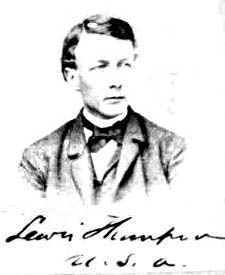
I am greatly indebted to Sherry Harris, a relative of Lewis Thompson, for adding a great deal of detail and both pictures to the story of this brave cavalryman.

Photo courtesy of Sherry Harris.

Photo courtesy of Sherry Harris.

Lewis Tappen Thompson was born in Philadelphia on July 25, 1838. He was the eldest of five children who survived childhood. His father, also named Lewis, was a publisher and member of the Anti-Slavery Society in Philadelphia. He was also part of the Underground Railroad before the Civil War.

Lewis was raised in Philadelphia, and educated for a business career. He was working as a cashier and bookkeeper for P. Waples and Co. of Philadelphia when the war broke out. Lewis and his brother James enlisted in Company A, 71st New York State Militia, a ninety day regiment, on April 21, 1861, and mustered out with the rest of the company on July 30th. He served primarily at the Washington Navy Yard, but also fought in the first battle of Bull Run.

When the regiment was mustered out, Thompson was appointed a lieutenant of volunteers and assigned as an aide on the staff of Brigadier General John C. Fremont. After Fremont was relieved of command, he worked briefly as an adjutant general for Lane’s brigade before being appointed a captain in the 3rd Kansas Cavalry. Singled out for bravery and leadership in a winter expedition into Missouri for forage, General Lane recommended him for an appointment in the regular army.

On February 19, 1862, Lewis Thompson was appointed a second lieutenant in the 2nd U.S. Cavalry and assigned to Company I. He wouldn’t see his new company for nearly a year. He remained at Fort Leavenworth, Kansas for several more months working as a Mustering & Disbursing Officer. He was promoted to first lieutenant on October 28, 1862, but word of the promotion did not reach him or the regiment until the following spring.
Lieutenant Thompson joined the 2nd U.S. Cavalry at Fort Albany, Virginia in December 1862, where several recently recruited companies were en route to join the regiment. He commanded Company G during the march, then joined Company I upon arrival. He spent the winter on picket duty with his company, based from their winter quarters near Falmouth.

Lieutenant Thompson was active in the spring campaign, serving with his company under Lieutenant Thomas Dewees during Stoneman’s Raid and the battle of Brandy Station. He received a brevet promotion to captain for gallant and meritorious service two weeks later during the battle of Upperville on June 21, 1863.

Lieutenant Thompson was captured during the Gettysburg campaign on July 2, 1863 while “attempting to communicate with corps headquarters,” according to brigade commander Wesley Merritt’s report on the battle. He was held at Libby Prison in Richmond until June 1864, then he was transferred briefly to Macon, Georgia and then onward to Charleston, South Carolina.

Lewis became very sick with tuberculosis and bronchitis while in Charleston, and likely would have died there if not for some family intervention. His sister, Matilda, had married Brigadier General Rufus Saxton, a quartermaster officer. When the Union captured parts of South Carolina in 1864, Saxton was appointed military governor of the state. He established his offices in the same building as the erstwhile Confederate commander of the area, former member of the 2nd Dragoons William Hardee. Hardee had been Saxton’s commander at West Point before the war. Saxton heard of his brother in law’s illness, and by luck was holding one of Hardee’s staff officers of the same rank prisoner. After Saxton contacted Hardee, “he responded cordially, and the two officers were exchanged, and the life of one brave officer was saved.”

Thompson was exchanged at Charleston, SC on October 4, 1864, and sent to Camp Parole, near Annapolis, Maryland to recover in the military hospitals there. After recovering from his illness and his release from Camp Parole, Maryland, Captain Thompson was assigned to special duty on the staff of Governor Cummings in Golden City, Colorado. He served there from September 25, 1865 until September 1866, when he was ordered to join his company. In the interim, he had been promoted twice. He received a brevet promotion to major for meritorious service during the war on September 25, 1865. On July 28, 1866, he was promoted to captain and command of Company L, 2nd U.S. Cavalry.

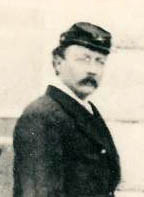
Thompson continued to suffer the effects of his captivity for the remainder of his life. He took a sick leave of absence from August 16, 1868 to March 29, 1869. He rejoined his company at Fort Ellis, Montana in the summer of 1869. The photo below is from a group picture of regimental officers on a porch at the fort.

Lewis_Tappen_Thompson_2

On February 26, 1869, the President directed that the brevet rank of Colonel be conferred upon Thompson. The reason was not stated. Other than the letter to Secretary of War Schofield directing the promotion on Executive Mansion stationery, there is no documentation of the promotion in his records.

1869 Comm T24 pg 2

Captain Thompson was sent to a retiring board in 1870, but the board recommended him for retention. He proved their judgment in the field, commanding his company during the Piegan expedition under Major E.M. Baker earlier that year. He also led his company in an engagement with Sioux at Prior’s Fork, Montana on August 14, 1872.

He returned home to Germantown, Pennsylvania on a sick leave of absence August 25, 1874 to September 12, 1875. He was suffering from chronic bronchitis and tuberculosis. One of the certificates of sickness states “the latter Cachenia having existed for the past six years, I reproduce the certificate given by Dr. Frantz, Surgeon, U.S.A. and continued in June 67 by Dr. Bailey, Surgeon, U.S.A.”

Despite his illnesses, he remained in touch with the regiment and its former officers. He even wrote a short chapter on the Piegan expedition of 1870 for Theophilus Rodenbough’s From Everglade to Canon with the Second United States Cavalry, published in 1875.

Captain Thompson commanded Company L in Major James Brisbin’s battalion of the 2nd Cavalry in Colonel John Gibbon’s column during the Little Big Horn campaign. He was so ill toward the end of the march that he was carried on a stretcher behind a mule with his company.

Lewis Thompson committed suicide in his bed near the headwaters of the Little Big Horn at 6 a.m. on July 19, 1876 “by shooting himself through the breast.” Assistant Surgeon H.O. Paulding’s letter stated, “Captain Thompson had been ailing with Neuralgia of the Stomach, together with excessive vomiting and diarrhea, for two days previously, and no doubt it was the intense suffering that produced the mental aberration which led to the fatal act.”

An article in the Freeman Journal noted, “He was a gentle, genial man, a true gentleman. He was buried at 6:30 pm. All the officers and men attended. General Gibbon made a few appropriate remarks. 1st LT. Edward McGuire read the service.”

In a letter to General Sherman upon learning of his death, Governor Potts of Montana wrote “He was a fine officer and an accomplished gentleman, & was very popular. He was a Philadelphian.”

Unfortunately, Thompson’s story didn’t end there. His brother in law, Lieutenant Colonel Rufus Saxton, requested to move his remains home from Montana to be buried with the rest of his family. His request was endorsed by Brigadier General John Pope, commander of the Department of the Missouri, and Lieutenant General Philip Sheridan, but denied by order of the Secretary of War.

A year later, Saxton and Lewis’ brother moved his remains to the family plot in Saulsbury Church Yard, Bucks County, Pennsylvania. The cemetery is currently known as Thompson Memorial Cemetery.

Sources:

Heitman, Francis B. Historical Register and Dictionary of the United States Army. Washington: Government Printing Office, 1903. Page 640.

Henry, Guy V. Military Record of Civilian Appointments in the United States Army, Volume 2. New York: George W. Carleton, 1869. Page 345.

National Archives, Record Group 94, Letters Received by the Office of the Adjutant General, 1861-1870.

National Archives, Record Group 94, Letters Received by the Commission Branch, 1863-1870.

National Archives, Record Group 94, U.S. Returns from Regular Army Non-infantry Regiments, 1821-1916: 2nd U.S. Cavalry

Official Records of the War of the Rebellion, Series I, Volume 27, Part 1, page 943.

Rodenbough, Theophilus. From Everglade to Canon with the Second United States Cavalry. Norman: University of Oklahoma Press, 2000. Pages 378-383 and 470.

Saxton, Rufus. “The Reminiscences of a Quartermaster in the Early Days of the Civil War,” Pocumtuck Valley Memorial Association, Volume 6 (1921), pages 394-412.

Fort Garland – A Civil War History

09 Thursday Oct 2014

Posted by dccaughey in 1861, 1863, 1864, 2nd Dragoons/ 2nd Cavalry, 2nd U.S. Cavalry, 3rd U.S. Cavalry, forts

≈ 2 Comments

Tags

1st Colorado Volunteer Cavalry, 1st New Mexico Cavalry, 2nd U.S. Cavalry, 3rd U.S. Cavalry, Civil War, E.R.S. Canby, Fort Garland

Work sent me over to the San Luis Valley of Colorado a couple of months ago. Normally the valley isn’t much of a tourist destination, with the exception of land-locked natives in search of sand dunes and alligators. But it’s also the site of the first and second forts constructed in Colorado Territory, Fort Massachusetts and Fort Garland. While the former was quickly abandoned in the 1850s, the second figured slightly in the Civil War. This proved too long for a single post, so this one will focus on the fort’s Civil War history and I’ll do another on the fort itself.

1861

At the beginning of 1861, the fort was garrisoned by three companies of regulars: Companies A and F, 10th Infantry and Company G, 2nd Dragoons. The post was commanded by Captain Cuvier Grover of the 10th Infantry, and Lieutenant Ebenezar Gay commanded Company G. In February Company G was ordered to Taos, New Mexico, and in March to Fort Union. Major E.R.S. Canby, 10th Infantry, rejoined from an expedition into Navajo county in March, and resumed command of the post.

general_edward_canby

Edward Richard Sprague Canby, a native of Kentucky, graduated from West Point in 1835. He served in the 2nd U.S. Infantry until 1855, when he was promoted to major in the 10th Infantry. During the Mexican War, he earned brevet promotions to major at Churubusco and Contreras and to lieutenant colonel at Belen Gate, Mexico City for gallantry in action. Major Canby was ordered south to Fort Union in May, and Major Daniel P. Whiting, also of the 10th Infantry, arrived June 15th to assume command of the two infantry companies and the post.

danielpwhiting

David Powers Whiting graduated from the United States Military Academy in 1828, 28th in his class. He served in the 7th U.S. Infantry as a lieutenant and captain, and earned a brevet promotion to major during the Mexican War for gallant and meritorious conduct during the battle of Cerro Gordo. He was promoted to major in the 10th Infantry on December 20, 1860, and was a year senior to Canby.

Company F, 10th Infantry was ordered to Fort Union July 9th, leaving the understrength Company A to garrison the fort. First Lieutenant William H. Russell commanded the 22 enlisted men present for duty, as well as serving as the post’s acting assistant quartermaster and acting assistant of commisary services. Company I, 2nd U.S. Cavalry arrived at the post on October 9th. Captain T.J. Durnin of the 16th Infantry commanded the 30 enlisted men of the company present for duty.

Thomas James Durnin enlisted in Company G, 2nd U.S. Dragoons on June 14, 1855. He was promoted to corporal, sergeant and first sergeant in the company by the war’s outbreak. He was appointed a second lieutenant in the 16th Infantry in the orders expanding the regular army on May 14, 1861. Interestingly, though identified as a captain in numerous post returns, he was not promoted to first lieutenant until October, and was not actually a captain until December 1864.

The garrison remained unchanged for Major Whiting until December, which was a busy month for the post. Company A, 10th Infantry departed on the 10th for Santa Fe. Captain Theodore H. Dodd’s company of Colorado volunteers arrived on the 14th, followed seven days later by Captain James H. Ford’s company of Colorado volunteers.

1862

Garrison changes continued through the early months of 1862. Dodd’s Company stayed only long enough to recover from its long march and reprovision, departing January 3rd for Santa Fe. Ford’s Company left a month later, on February 5th. Company I, 2nd U.S. Cavalry, still commanded by Captain Durnin, was the post’s only garrison through spring and early summer.

In March 1862 the post was finally assigned medical staff. Civilian Lewis B. McLain was assigned as the acting assistant surgeon by the district’s medical director in Santa Fe.

July 1862 was another month of great change for the small fort. Major A.H. Mayer, 1st New Mexico Volunteers, arrived to take command of the post on July 17th. Daniel Whiting, now a lieutenant colonel in the 10th U.S. Infantry, departed to join his regiment on the 26th. He was the last regular army officer to command the post for several years. Company I, 2nd U.S. Cavalry was joined in garrison by Company D, 1st New Mexico Volunteers on July 30th.

Company I and Captain Durnin departed the post for Fort Union on August 9th, replaced two weeks later by Company H, 2nd Colorado Volunteers on August 24th. Company H and Company D, 1st New Mexico Volunteers departed on a ten day scout September 5th, marching 242 miles before returning to post on the 15th. They were joined by four additional companies the following month, raising the garrison to its largest size during the war. Company C, 3rd U.S. Cavalry arrived from Fort Union on September 24th, followed three days later by Company M, 1st New Mexico Volunteers. Companies H and K, 1st Colorado Volunteers, arrived under Major Edward W. Wynkoop on September 29th, bringing the garrison to 370 enlisted men by the end of the month. With only two company-sized barracks buildings, many of the men must have lived under canvas.

The garrison thinned considerably in October. Company C, 3rd U.S. Cavalry departed for Fort Lyon on the 3rd. Major Wynkoop left for Denver with Companies H and K, 1st Colorado Cavalry on the 26th, accompanied by Company H, 2nd Colorado Cavalry. Company D, 1st New Mexico Volunteers remained the sole garrison for the next few months, though the post commander changed several times.

1863

Major Mayer left the post on December 10th, ostensibly on 60 days leave, but he never returned. Captain Ethan W. Eaton of Company D, 1st New Mexico assumed command. The remainder of the winter was quiet, broken only by an expedition of 2 officers and 28 enlisted men to Conejos ordered by the Department of New Mexico in February. Captain Eaton established the garrison at Conejos under Lieutenant Moore and returned to the post.

April was evidently a confusing month for the post. Post returns at the time were filed every ten days instead of the usual monthly requirement. Early in the month, Captain Joseph B. Davidson and Company C, 1st Colorado Cavalry arrived at the post. Captain Davidson assumed command on the 16th, but on the 20th both he and Captain Eaton filed post returns stating they were in command. Closer examination revealed that Captain Eaton had been absent without leave until April 18th, and had apparently been submitting returns in absentia. When this started is unclear, but the May return shows that Captain Eaton was dismissed from the service by War Department Special Order 63, April 9, 1863. Captain Davidson remained in command of the post, and Captain Birney arrived to take command of Company D on May 30th.

There was also a murder on the post in May. According to the post return, “Private Lujan of Co. D 1st New Mexico Vol was Shot by Private Cambojar while asleep in his quarters.” It is unclear what the outcome of this event was, but the company was relieved from duty at the post the next month, departing under Captain Birney for regimental headquarters on June 6th. Company E, 1st Colorado Cavalry arrived on July 12th, bringing the present for duty strength of the garrison to 52 enlisted men.

August 1863 was a very active month for the post. Reporting requirements changed, with orders now coming to the post from the District of Colorado rather than the Department of New Mexico. Lieutenant Colonel Samuel Tappan of the 1st Colorado Volunteers arrived to take command of the post on August 12th. Colorado also sent additional forces to garrison the fort. The 45 enlisted men of Company F, 3rd Colorado Volunteers under 2nd Lieutenant Albert S. Gooding arrived from Denver on the 21st, and the 26 enlisted men of the Right Section, 1st Colorado Battery under 2nd Lieutenant Horace W. Baldwin arrived five days later. Lieutenant S.N. Crane of the 1st Colorado Cavalry and 30 men relieved 1st Lieutenant Moore’s garrison at Conejos, and he returned to the post and assumed command of the squadron on the 16th.

At the end of September, Governor John Lewis and Colonel Chivington briefly visited the fort while sending troops into the field against the Indians. Although there had been no issues near the fort, an expedition departed on the 29th. Lieutenant Colonel Tappan commanded a battalion consisting of Companies C and E, 1st Colorado Cavalry and the Right Section, 1st Colorado Battery. 2nd Lieutenant Gooding served as the battalion adjutant, and 1st Lieutenant David R. Wright assumed command of Company F, 3rd Colorado Volunteers and the post.

Tappan, Company E and the artillery section returned on October 10th, followed by Company C the next day. Company C was ordered to Denver on the 17th, and Company F of the 3rd Colorado was relieved and ordered to Fort Lyon on the 28th. There was apparently some difficulty with the artillery section during the expedition, as 2nd Lieutenant Baldwin was dismissed from the service at the end of the month.

Company E was reinforced by Company A, 1st Colorado Cavalry under Lieutenant Edward A. Jacobs on November 9th, bringing the squadron strength to 60 enlisted men. The Right Section, 1st Colorado Battery was commanded by a noncommissioned officer, and had only 10 enlisted men present for duty and no serviceable horses. This likely had something to do with Lt. Baldwin’s dismissal. On the 24th Lieutenant Moore and 40 men were dispatched to assist a supply train reach the post, most likely over La Veta pass.

1864

The winter of 1863-1864 was a quiet one for Lieutenant Colonel Tappan and the small garrison. In February, Lieutenant Baldwin returned to the artillery section, and in March the section changed from the right section to the left section. This appears to have simply been a change of designation, as no new troops arrived and Lt. Baldwin remained in charge of the section. The section departed for Camp Fillmore, Colorado Territory on April 16th.

On June 1st, Captain Charles Kerber’s Company I, 1st Colorado Cavalry relieved Companies A and E as the post garrison. With a strength of only 2 officers and 33 enlisted men, there was plenty of room for the newcomers. Captain Isaac Gray and Company E departed the same day for Spring Bottom on the Arkansas River, followed on the 14th by Lieutenant Jacobs and Company A. Captain Kerber assumed command of the post from Lieutenant Colonel Tappan on June 19th.

Despite the increasing hostilities with Indians elsewhere in the state that culminated in the Sand Creek Massacre in November, the remainder of 1864 was very quiet for the post’s small garrison. The company’s strength waned in the final months of the year. On November 1st, civilian F.R. Waggoner assumed duties as the post’s acting assistant surgeon, relieving Lewis McLain, the post longest tenured wartime resident. By December, the 37 enlisted men present for duty were nearly outnumbered by the post’s 24 civilian employees – a quartermaster clerk, a commissary clerk, two storekeepers, a wagon master, a saddler, a chief herder, two herders, , a cook, a butcher, eight teamsters and six laborers.

1865

1865 was uneventful for the post. Captain Kerber remained in command of the fort through the end of the war. In February, Company I was designated as “Squadron B, Veteran Battalion, 1st Colorado Cavalry.” Although the garrison’s strength had increased to 72 men present for duty by April, no new units arrived at the fort.

The wartime regular army commanders of Fort Garland did not fare well after the war. Canby, promoted to general in the interim, was killed by Modoc Indians during a peace conference in California in 1873. David P. Whiting retired before the war ended, on November 4, 1863. Thomas J. Durnin was transferred to the 25th Infantry Regiment as part of an expansion of the regular army on September 21, 1866. He was cashiered exactly one year from that date.

The following post will examine the post itself, and the efforts of a dedicated few to preserve it for future generations.

Sources:

Heitman, Francis B. Historical Register and Dictionary of the United States Army. Washington: Government Printing Office, 1903.
Henry, Guy V. Military Record of Civilian Appointments in the United States Army, 2 volumes. New York: George W. Carleton, 1869.
National Archives, Record Group 94, Letters Received by the Office of the Adjutant General, 1861-1870.
National Archives, Record Group 94, U.S. Returns from Regular Army Non-infantry Regiments, 1821-1916: 2nd U.S. Cavalry
National Archives, Record Group 94, U.S. Returns from Military Posts: Fort Garland, CO
National Archives, Record Group 94, U.S. Army Register of Enlistments, 1798-1914

Fiddler’s Green – Richard Fitzgerald

06 Monday Oct 2014

Posted by dccaughey in 1864, 5th U.S. Cavalry, Battle of Winchester, Casualties, cavalry depots, Fiddler's Green, officers

≈ Leave a comment

Tags

5th U.S. Cavalry, battle of Winchester, Civil War, Richard Fitzgerald

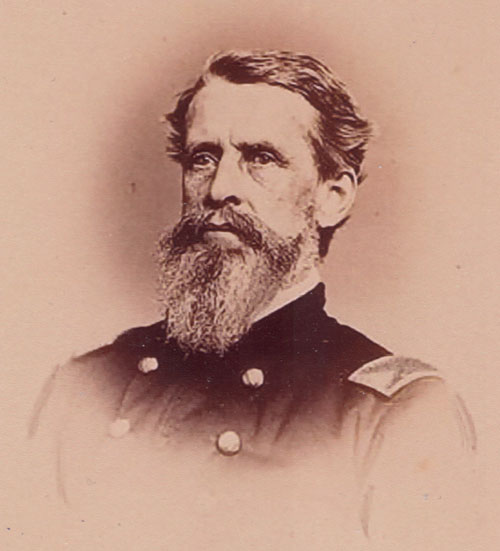
Richard Fitzgerald was born in County Waterford, Ireland in 1838. After immigrating to the United States, he worked as a fireman prior to serving in the army. He was enlisted into the General Mounted Service by Lieutenant Magruder in Baltimore, Maryland on January 20, 1859. His enlistment documents describe him as 5’ 10” tall, with brown hair, hazel eyes and a ruddy complexion.

At this period, the General Mounted Service meant assignment to the Cavalry School at Carlisle Barracks, Pennsylvania and various recruiting assignments. Fitzgerald rose through the enlisted ranks, and was serving as a first sergeant in the permanent company at Carlisle Barracks service when he was appointed a second lieutenant in Company I, 5th U.S. Cavalry on November 7, 1863.

Cavalry depot commander Captain David Hastings of the 1st U.S. Cavalry submitted the recommendation for his appointment, which was also signed by every officer assigned to the depot. It read: “Sergeant Hastings is well instructed in all the details and duties relative to the mounted service, and will make an excellent Cavalry Officer. His character and services justly intitle [sic] him to that position: he done some good service, as first sergeant of the permanent company of this Depot, in the recent battles in Pennsylvania and Maryland.”

Lieutenant Fitzgerald joined his regiment at Mitchell’s Station, Virginia the following month. He served there through the winter and spring, including skirmishes at Barnett’s Ford, Charlottesville, Stanardsville, and Morton’s Ford. Although assigned to Company I, he spent very little time there. He was on special duty commanding Company E from January to March, then shifted to Company M in April as the spring campaign began.

He led his company ably in the Overland Campaign and Sheridan’s two raids toward Richmond. He was promoted to first lieutenant in Company I on June 12, 1864, replacing former sergeant major Joseph P. Henley when he was killed at Trevillian Station. Fitzgerald continued to command Company M as the regiment was transferred to the Shenandoah Valley.

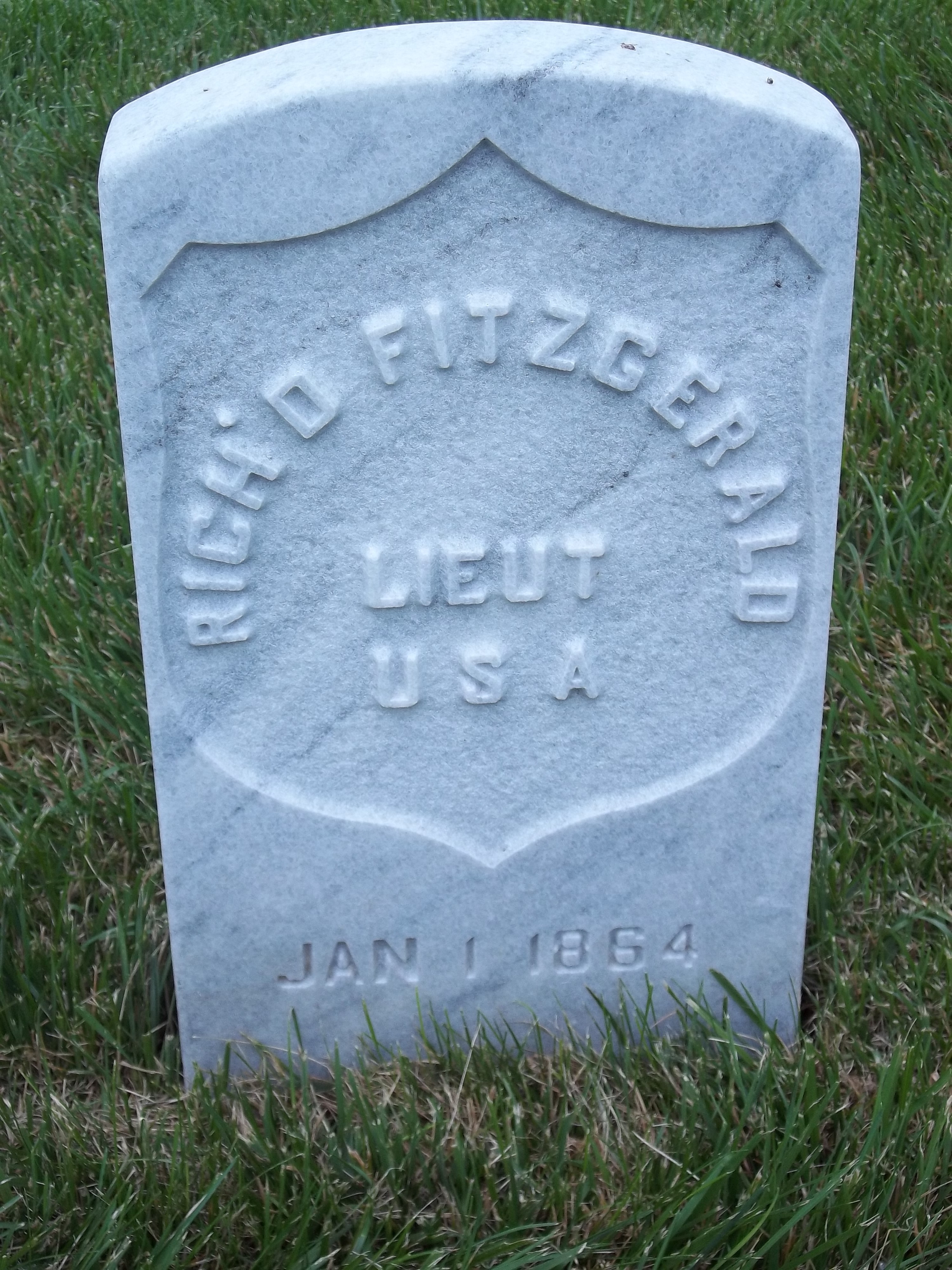
Lieutenant Fitzgerald led his company well in the near constant skirmishing that comprised the first month of the campaign. During the battle of Opequon on September 19, 1864, “he was killed while gallantly leading his company in a charge against the enemy.” He is buried in the military cemetery at Winchester, Virginia.

LT Fitzgerald 1

Sources:
Heitman, Francis B. Historical Register and Dictionary of the United States Army. Washington: Government Printing Office, 1903. Page 268.
Henry, Guy V. Military Record of Civilian Appointments in the United States Army, 2 volumes. New York: George W. Carleton, 1869. Volume 1, page 152.

National Archives, Record Group 94, Letters Received by the Office of the Adjutant General, 1861-1870.
National Archives, Record Group 94, U.S. Returns from Regular Army Non-infantry Regiments, 1821-1916: 1st, 2nd and 5th U.S. Cavalry

National Archives, Record Group 94, U.S. Army Register of Enlistments, 1798-1914
Price, George F. Across The Continent With The Fifth Cavalry. New York: D. Van Nostrand, 1883. Pages 507-508.

Memorial Day: On the Death of Edward Falkner

26 Monday May 2014

Posted by dccaughey in 1863, 6th U.S. Cavalry, battle of Brandy Station, Memorial Day, poetry

≈ 1 Comment

Tags

6th U.S. Cavalry, Beverly Ford, Brandy Station, cavalry, Civil War, Memorial Day

It strikes me as appropriate on Memorial Day, formerly Decoration Day for the Civil War dead, to post on a fallen soldier. And I do not think I can do so more eloquently than this family member did in 1863. Jimmy and I both loved this poem and had hoped to include it in our history of the 6th U.S. Cavalry, but unfortunately there wasn’t room.

“Lines on the Death of Mr. Edward Falkner, Jun., of the 6th Regiment U.S. Cavalry, Who fell in a Cavalry Charge at Brandy Station, on the ‘Rappahannock,’ 9th June, 1863.
The freest land the sun illumes,
Resounds with shouts of war;
The South a hostile form assumes
‘Gainst freedom’s sacred law;

And freedom’s sons pour out their life
Her Honour to sustain,
And kindred meet in bloody strife
Upon the battle plain;

And happy homes are rudely shorn
Of all that gave them joy,
For sire and son away are borne
Upon the field to die.

The maiden mourns in deep distress
For him she once caressed;
The widow strains the fatherless
Upon her sobbing breast.

Thousands that left their native land,
In search of peaceful toil,
Are stretched by war’s relentless hand
Upon the gory soil.

One home of five left England’s shore
With all she boasts behind,
And crossed the wide Atlantic o’er
A better land to fnd.

These dwelt in peace till age’s frost
Upon the parents came,
And boyhood of their sons was lost,
In manhood’s hardy frame; —

Who fired with zeal for freedom’s cause,
The Federal army join,
And in defence of righteous laws
Confront the Southern line.

The eldest chose the horseman’s ground,
Where swords and lances gleam,
And soon among his comrades found
Respect and high esteem;

For though his rough and stalwart frame
Could fearless meet the foe,
His dauntless heart knew mercy’s name,
And felt for others’ woe.

Long did the starry banner wave,
As emblem of the free,
Where manfully he fought to save
The flag of liberty.

But on the 9th of June he fell
By Rappahannock’s side,
When in a noble charge to quell
The advanced rebel tide.

Two thousand of the choicest horse
From out the Federal band,
Were marched against the Southern force
At General Lee’s command.

The armies met, the fight began,
And tumult filled the air,
While streams of fire like lightning ran,
Midst the conflict there.

Charge! Charge!! my men, their leader cried,
And ere the bugle sounds,
The gallant horsemen fiercely ride
Across the rebel bounds.

Where, through dense clouds of dust and smoke,
The bullets fell like rain,
While the hoarse cannon’s thunder spoke
A requiem for the slain.

But in that charge our hero died,
Pierced by a musket ball,
And o’er his foaming charger’s side
Was lifeless seen to fall.

The missile through his heart had broke,
And did its work too well;
For not a word the soldier spoke
When to the ground he fell.

Swift from its cell, amid the strife,
The soldier’s spirit fled,
Nor lingered long that moral life
‘Twixt dying and the dead.

With willing hands the corpse to save,
From the stern fate of war,
His comrades bore it o’er the wave,
To a more peaceful shore;

And dug with mournful haste a grave,
For him they loved so well,
While tears of manly sorrow strayed,
Down their rough cheeks, and fell

On the uncoffin’d form that lies,
In death’s cold slumber there,
And turned to heaven their tearful eyes,
In mute but earnest prayer.

Thus broke the sacred chain that bound
That home in life and love,
But firmer will its links be found,
That bind that home above.

Green be the memory of the brave
That fought for freedom’s right,
And nobly died her flag to save
From the slave tyrant’s might.

Honour to England’s sons of toil,
That left their native shores,
And fell upon a foreign soil
For freedom’s righteous laws.

J.F.
Birmingham, 1863.”


Edward Falkner was born in England in 1838, and was a farmer in New York before the war. He enlisted into Company I, 6th U.S. Cavalry at Rochester, New York on September 7, 1861. He was killed in action as the poem states at Beverly Ford on June 9, 1863.

Starting the 1864 Campaigns

08 Thursday May 2014

Posted by dccaughey in 1864, 1864 raids, 1st U.S. Cavalry, 2nd U.S. Cavalry, 5th U.S. Cavalry, manning, Reserve Brigade

≈ 2 Comments

Tags

1864, 1st U.S. Cavalry, 2nd U.S. Cavalry, 5th U.S. Cavalry, A.K. Arnold, Alfred Gibbs, cavalry, Civil War, N.B. Sweitzer, Reserve Brigade, T.F. Rodenbough, Wesley Merritt

150 years ago today, the Army of the Potomac’s Cavalry Corps engaged in its first battle of 1864 at Todd’s Tavern. Before looking at the battle itself, I thought it would be helpful to look at the state of the three regular regiments in the Reserve Brigade as the campaign began. Listing the numbers may seem tedious, but it will go a long way to help the reader visualize the effects of the year’s battles on these understrength regiments. 1864 was an absolutely brutal year for these regiments, and one would be combat ineffective by year’s end.

On April 28th, the regiments of the Reserve Brigade moved out of their winter camps near Mitchell’s Station and encamped about 1.5 miles from Culpeper. At this time the brigade consisted of the 1st, 2nd and 5th U.S. Cavalry, the 6th Pennsylvania Cavalry, and the 1st New York Dragoons. Colonel Alfred Gibbs, commander of the 1st New York Dragoons, commanded the brigade, as Brigadier General Wesley Merritt was in temporary command of the First Division.

The 1st U.S. Cavalry was commanded at the beginning of May by Captain Nelson B. Sweitzer. This Pennsylvania native was the most experienced of the three commanders. An 1853 graduate of the U.S. Military Academy, he had served in the regiment his entire career. It had 8 officers and 487 enlisted men present for duty of an authorized 42 officers and 1,189 enlisted men. Its twelve companies averaged 40 enlisted men each. On the April 1864 return, the regiment requested 356 recruits to bring it up to full strength.

The 2nd U.S. Cavalry started 1864 campaigning under Captain Theophilus F. Rodenbough. A civilian appointee from his native Pennsylvania in 1861, Rodenbough was by now a veteran, his only absence from the regiment a brief stint as a prisoner of war after Second Manassas. The regiment had eight officers and 271 enlisted men present for duty, with another 131 enlisted men on extra duty. Its twelve companies averaged only 21 enlisted men each. On the April 1864 return, the regiment requested 559 recruits to bring it up to full strength.

The 5th U.S. Cavalry was commanded at this time by Captain Abraham K. Arnold. Another Pennsylvanian, Arnold graduated from West Point in 1859. He missed the regiment’s ill-fated charge at Gaines Mill, serving as an aide de camp to General McClellan until March of the previous year. He distinguished himself multiple times during the Overland Campaign, earning a Medal of Honor. Only seven of the regiment’s twelve companies were present for duty, as Companies B, F, K and L served as escort to General Grant’s headquarters, and Company D served at Point Lookout, Maryland. Indeed, the regiment had 23 of its assigned officers and 263 enlisted men on detached service, at army headquarters and elsewhere. The seven companies present mustered only 6 officers and 206 enlisted men, an average of 29 men each. On the April 1864 return, the regiment requested 630 recruits to bring it up to full strength.

Unfortunately, I don’t presently have unit strengths for the 6th Pennsylvania and the 1st New York Dragoons. The 1st New York a relatively inexperienced unit, but the 6th Pennsylvania had served in every 1862 campaign of the Army of the Potomac, and its numbers reflected its veteran status.

The three regiments combined for a present for duty strength of 22 officers and 964 enlisted men, of an authorized strength of 126 officers and 3,567 enlisted men. Officer strength was 17.4% and enlisted strength was 27%. And the hardest year’s campaigning was about to begin.

← Older posts
Newer posts →

Recent Posts

  • 5th U.S. Cavalry at the Stone Fence
  • Thomas Montgomery, 1st U.S. Cavalry
  • Thomas Corbett, 2nd US Cavalry
  • Charles W. Canfield, 2nd U.S. Cavalry
  • Michael Shaughnessy – 2nd U.S. Cavalry

Meta

  • Create account
  • Log in
  • Entries feed
  • Comments feed
  • WordPress.com

Blogs I Follow

  • Maine at War
  • Emerging Civil War
  • History Radar
  • A Meaningful Finale
  • The Task at Hand
  • Bull Runnings
  • Army at Wounded Knee
  • Crossroads
  • Campaigns of the U. S. Civil War
  • Irish in the American Civil War
  • To the Sound of the Guns
  • Daydreams of the Soul

Enter your email address to follow this blog and receive notifications of new posts by email.

Join 195 other subscribers

Regular Cavalry in the Civil War

Regular Cavalry in the Civil War

Buy a copy of my book!

From McFarland & Company or contact me directly.

Enter your email address to follow this blog and receive notifications of new posts by email.

Join 195 other subscribers

Don

dccaughey@aol.com
1-719-310-2427

Blog at WordPress.com.

Maine at War

Maine at War explores the Civil War as experienced by the men and women from Maine who lived during the tumultuous period.

Emerging Civil War

Providing fresh perspectives on America's defining event

History Radar

A Meaningful Finale

A 28-year Army veteran takes to the Appalachian Trail to contemplate a life well served & the road ahead

The Task at Hand

Powered by Human Intelligence

Bull Runnings

A Journal of the Digitization of a Civil War Battle

Army at Wounded Knee

A blog dedicated to documenting through primary sources, the Army's actions at Wounded Knee

Crossroads

Where history, scholarship, the academic life, and other stuff meet.

Campaigns of the U. S. Civil War

Campaigns of the U. S. Civil War

Irish in the American Civil War

Exploring Irish Emigration in the 19th Century United States

To the Sound of the Guns

Military History

Daydreams of the Soul

  • Subscribe Subscribed
    • Regular Cavalry in the Civil War
    • Join 65 other subscribers
    • Already have a WordPress.com account? Log in now.
    • Regular Cavalry in the Civil War
    • Subscribe Subscribed
    • Sign up
    • Log in
    • Report this content
    • View site in Reader
    • Manage subscriptions
    • Collapse this bar
 

Loading Comments...