• About

Regular Cavalry in the Civil War

Regular Cavalry in the Civil War

Tag Archives: cavalry

Carlisle Barracks and the Mounted Recruiting Service, part 3

15 Tuesday Oct 2013

Posted by dccaughey in 1864, 1st U.S. Cavalry, 2nd U.S. Cavalry, 3rd U.S. Cavalry, 4th U.S. Cavalry, 5th U.S. Cavalry, 6th U.S. Cavalry, cavalry, cavalry depots, officers, recruiting, resignations

≈ Leave a comment

Tags

Carlisle Barracks, cavalry, Civil War, david H. Hastings, recruiting, William B. Royall

As 1864 opened, the only four operating recruiting stations were Cincinnati, Cleveland, Harrisburg and New York.  Lieutenant Anson Doolittle of the 4th U.S. Cavalry added a fifth in Madison, Wisconsin on January 8th.

In April, the growing controversy surrounding repairs to the post reached a head.  There were a number of issues concerning the contracts and materials needed to repair the post after July’s attack, and then-Captain Hastings wrote on several occasions for guidance and clarification from the Quartermaster General concerning the repairs.  Naturally enough, those who did not receive contracts or orders for material were disgruntled.  As post commander, Hastings was of course at the center of the storm.  Unfortunately for him, he had unwisely pursued repairs without the specific approval of the Quartermaster General, and found himself in a great deal of trouble as a result.

Hastings, who had been promoted to major in the 5th U.S. Cavalry in September, was relieved of command on April 21, 1864.  Charges were subsequently preferred, which led to a conviction by a General Court Martial.  The sentence was initially very severe, but was later commuted to six months suspension of pay and benefits, causing a Congressional investigation.  In December, Major Hastings was permitted to retire “for incapacity resulting from injuries received, or from exposure in the line of duty, in conformity with an Act of Congress, of August, 1861.”  Lieutenant Hancock T. McLean of the 6th U.S. Cavalry, assigned to the post the month before, briefly assumed command of the post.  Thomas Tousey, in his book Military History of Carlisle Barracks and Carlisle, provides a thorough discussion of the issues surrounding Hastings’ dismissal.

On May 19, 1864, Major William B. Royall of the 5th U.S. Cavalry assumed command of the post.  Like the two officers who had preceded him, Royall was another very experienced cavalryman.  He initially entered service as a volunteer officer at the beginning of the Mexican War, and had been assigned to the 5th (then 2nd) U.S. Cavalry when it was formed in 1855.  He was severely wounded during fighting at Old Church, Virginia on June 13, 1862.  He received six saber wounds in hand to hand combat, including “two sabre-contusions on the right side of the head; a cut two inches long on the forehead; a long cut on the left cheek which bled profusely; a cut on the right wrist, dividing a tendon; and an incised fracture, four inches long, of the left parietal bone.”  He received a well-deserved brevet promotion for his conduct in the battle, but recovering from his many wounds took many months.  He came to Carlisle after serving two months at the Cavalry Bureau in Washington.

As spring turned to summer, activity increased around the depot.  The Madison recruiting station closed, and a new one opened in Rochester, New York.  Since the regiments were involved in active campaigning, officers from Carlisle were ordered to conduct parties of recruits to their new regiments.  If annotated on maps or in reports, these detachments were labeled with the regiment of the officer leading them.  A detachment of recruits bound for the 1st U.S. Cavalry led by an officer of the 3rd, for example, would be noted as a detachment of the 3rd U.S. Cavalry.

Lieutenant Hancock McLean of the 6th U.S. Cavalry conducted a detachment of recruits to the 5th Cavalry in late May.  Lieutenant Frank Stanwood of the 3rd Cavalry led a detachment of recruits to the 5th & 6th U.S. Cavalry in late June.  During Confederate Lieutenant General Jubal A. Early’s advance on Washington the following month, Lt. Stanwood was ordered by the commander of the Department of the Susquehanna to scout south toward the Potomac.  This seemingly errant band of regulars of the “3rd U.S. Cavalry,” which never served in the eastern theater during the war, has caused confusion among researchers, including this author.

The remainder of the summer and fall passed unremarkably.  Captain Thompson of the 4th U.S. Cavalry opened a recruiting station in St Louis in August.  Lieutenant Stanwood conducted another party of 155 recruits to the 5th U.S. Cavalry in October.  An additional 135 recruits were transferred in November, and 142 more in December.  Captain Thompson closed the recruiting station in St Louis in November, while stations reopened in Pittsburgh and Philadelphia as the year’s campaigning drew to a close.

During the early months of 1865, the depot continued to forward recruits to the field: 129 in January, 134 in February, 123 in March and 94 in April.  It is doubtful this last group reached its destination before the cessation of hostilities.  At the end of the war, recruiting stations were still operating in Cincinnati, Cleveland, New York, Philadelphia, Pittsburgh and Rochester.

The careers of several officers other the commanders were significantly affected by recruiting duty.  Copley Amory of the 4th U.S. Cavalry was appointed a second lieutenant from Massachusetts on August 5, 1861.  He returned to Carlisle from May to December 1862, when he was returned to his regiment.  He was again assigned to the depot in June 1863, this time forwarded to the recruiting station in Boston.  After six more months of recruiting duty, he resigned in December 1863.

Irish-born John McDonald enlisted as a private in Company K, 1st U.S. Dragoons in 1857, and was promoted to first sergeant prior to his appointment as a lieutenant in the same regiment.  He was assigned to the depot in October 1862, remaining until ordered to rejoin his regiment on February 6, 1863.  On June 15, 1863, he was ordered back to the depot, and remained on recruiting service the rest of the war.

Next is the oft-mentioned Frank Stanwood of the 3rd U.S. Cavalry.  He joined at Carlisle as a new second lieutenant on September 27, 1861.  He remained until transferred to his regiment as a first lieutenant on August 21, 1862.  He served as the regimental quartermaster from his arrival until January 15, 1863.  In April, he was ordered back to the mounted recruiting service, where he remained until February 1865.  In all, Stanwood served only twelve months with his regiment during the war.  Ironically, he received a brevet promotion to captain on March 13, 1865 “for coolness, energy and skill in battle.”  He also received brevets to major and lieutenant colonel the same day for what was probably a more accurate description of “faithful and meritorious service during the war.”

Finally, Robert S. Smith was appointed a second lieutenant in the 2nd U.S. Dragoons on May 4, 1861.  He remained on recruiting service through promotions to first lieutenant and captain.  Smith did not actually join his regiment until September 5, 1864, over three years after his appointment!  Two weeks later he saw his first combat while leading his company at the battle of Opequon, or 3rd Winchester on September 19th.  Interestingly, his testimony of valor observed on the field in his first fight was later significant in the award of the Medal of Honor to First Sergeant Conrad Schmidt of Company K.

The concluding post of this series will discuss the recruiting stations and list the sources used to compile the article.
Carlisle Barracks and the Mounted Recruiting Service, part 2

12 Saturday Oct 2013

Posted by dccaughey in 1862, 1863, 1st U.S. Cavalry, 2nd U.S. Cavalry, cavalry, cavalry depots, manning, officers, recruiting

≈ 5 Comments

Tags

1st U.S. Cavalry, 2nd U.S. Cavalry, Carlisle Barrcks, cavalry, Civil War, recruiting

Recruiting continued normally until the spring of 1862.  A number of recruits were provided to Company L, 5th U.S. Artillery and Companies H and M, 4th U.S. Artillery from April to June.  Part of the mandate of the Mounted Recruiting Service was also to recruit for horse artillery batteries, but this is the only mention of them or appearance of artillery officers at Carlisle in a professional capacity during the war.

During the summer, manpower shortages in the older regiments reached the point where they had to be addressed.  The 2nd U.S. Cavalry acted first, distributing the privates from Companies A, B and D among the rest of the regiment in July.  The officers, noncommissioned officers and buglers were sent to Carlisle to raise new companies.  The 1st U.S. Cavalry followed suit the following month with Companies A, E, F and K.  Beginning in October, one new company was raised for each regiment as well, Company M for the 1st U.S. Cavalry and Company L for the 2nd.  Recruiting for these companies continued through the end of the year.

Several additional recruiting stations were opened to meet the increased demand.  During the summer and fall, stations opened in Buffalo, Norristown, Philadelphia, Pittsburgh, Wheeling, Chicago, Cleveland, Indianapolis, Detroit, Elmira, Baltimore and Washington, D.C.

December saw the departure of most of the companies.  1st U.S. Cavalry Companies A, F and M departed under the command of Captains Richard S.C. Lord and Milton Carr and Lieutenant Cesar Fisher respectively.  The four companies of the 2nd U.S. Cavalry marched south under Captains Robert Clary and Theophilus Rodenbough, as well as Lieutenants Thomas Dewees, Robert Lennox and James Potter.  In all, 667 new recruits were forwarded to the two regiments during the month.

A great deal of recruiting from volunteer regiments, usually infantrymen, took place from October to December 1862 in Washington, D.C, in Maryland near Harper’s Ferry and in Tennessee near Nashville, but this was not affiliated with the mounted recruiting service.  The enlistments were accomplished by regimental adjutants or their designated representatives.

In February 1863, Companies E and K finally returned to the 1st U.S. Cavalry under Lieutenants Edward Benton and John McDonald.  In preparation for the opening of spring campaigning, more recruits were pushed south to the regiments.  Lieutenants Cesar Fisher and Judson Haycock led 89 to the 1st U.S. Cavalry, Captain Thomas Canfield and Lieutenant Daniel Flynn took 86 to the 2nd U.S. Cavalry, and Captain William McLean led 87 to the 5th U.S. Cavalry.

In June 1863, the war came to Carlisle.  As the Confederate forces crossed into Pennsylvania, Captain Hastings dispatched mounted scouts south to ascertain their position and intentions.  On the morning of June 18th, they were fired on by enemy pickets just south of Chambersburg. Unable to resist with only a garrison company at his disposal, Captain Hastings was forced to abandon the post.  As he wrote in the post return, “Vacated in the face of the enemy June 25, 1863, having no means of defense.  Brought off all munitions of war and moveable public property.”

As soon as the Confederates began their retreat to Virginia, Hastings reoccupied the post and resumed normal operations.  Many of the buildings had been burned, so troops lived in tents while repairs were initiated.

Companies D and G of the 1st U.S. Cavalry arrived in July to reconstitute.  They were the last companies to refit at Carlisle, as the new cavalry depot at Giesboro Point started operations in October.  They were transferred back to their regiment in October under Lieutenants Reuben Bernard, William Pennock and David Perry.  Sixteen recruiting stations continued to operate during the year to provide new recruits.

Surgeon J.J.B. Wright was placed on detached service in New York from October to December 1863.  Surgeon G.S. Palmer was temporarily added to the staff during his absence.  Palmer administered Lincoln Hospital in Washington, D.C. prior to coming to Carlisle.

The winter of 1863-1864 was relatively quiet, as repairs to the post continued and armies went into their winter quarters.

Carlisle Barracks and the Mounted Recruiting Service, part 1

09 Wednesday Oct 2013

Posted by dccaughey in 1861, 1st U.S. Cavalry, 2nd U.S. Cavalry, cavalry, manning, officers, recruiting, training

≈ 1 Comment

Tags

1st U.S. Cavalry, 2nd U.S. Cavalry, Carlisle Barracks, cavalry, Civil War, david H. Hastings, Lawrence P. Graham, recruiting

While I’ve covered bits and pieces of regular cavalry recruiting in the past, an in depth look at the post returns for Carlisle Barracks during the war revealed a wealth of information on how and where this recruiting was accomplished.  This not the be-all, end-all for this topic.  It’s a blog post, after all, not a journal article.  There are several bits of information that could be of tremendous help, such as the location of the recruiting station in Buffalo, and any newspaper coverage of it.  But I think it is the most comprehensive examination of the process to date.

The theory behind cavalry recruiting changed little with the advent of the war.  The process was relatively simple.  Mounted regiments were tasked to provide officers, noncommissioned officers and sometimes musicians to man recruiting stations at selected cities in the United States.  Periodically these recruits were forwarded from the recruiting stations to Carlisle Barracks.  Here the “Permanent Company,” a training cadre, provided them basic instruction as a cavalryman.  Once the troopers could demonstrate a reasonable aptitude in both the mounted and dismounted tasks of the “School of the Trooper,” as defined in the Cavalry Tactics manual, they were dispatched in detachments to their designated regiments.  This movement was frequently supervised by the same officers and soldiers who originally recruited them.  While this process did not change noticeably in substance during the war, it changed significantly in scope.

Whereas prior to the war only one or two recruiting stations were active at a time, during the course of the Civil War nineteen different cities had stations active at various times.  These were in addition to the stations utilized for the initial recruiting of the twelve companies of the 6th U.S. Cavalry in 1861, which did not fall in the purview of Carlisle Barracks.  It also did not cover the recruiting of volunteers in their camps which occurred near Harpers Ferry in the Eastern Theater in October 1862.  It did, however, include the additional companies, usually designated L and M, added to existing regiments during the war, as well as companies consolidated within the regiments and sent to Carlisle to refit.

Recruiting for the mounted regiments was the responsibility of the “Mounted Recruiting Service.”  This was a purely administrative command, as Congress had not authorized such an organization outside the scope of the existing regiments.  As with all such taskings, the required officers and soldiers were taken “out of hide” from the regiments in the field.  The post commander of Carlisle Barracks had the additional title and responsibilities of the “Superintendent, Mounted Recruiting Service.”  Before the war, this was a major’s position, but during the war it was held by a captain and briefly by a lieutenant.

The commander at the outbreak of the war was Major Lawrence Pike Graham of the 2nd Dragoons.   Graham was something of a legend in the mounted forces.  He was appointed a second lieutenant in the 2nd Dragoons in 1837, and spent the next several years in the Seminole Wars in Florida.  During the Mexican War, he commended the other company in Captain Charles May’s squadron during the famous charge at Resaca de la Palma.  During the Sioux campaign of 1854-55, he commanded a squadron of his own.

Other than the post commander, only the surgeon and the chaplain were permanently assigned to the post.  Surgeon Burton Randall served as the post surgeon until September 1861, when he was assigned to a hospital in Annapolis.  A Maryland native, Randall graduated as a physician from University of Pennsylvania in 1828.  He entered service as an assistant surgeon in 1832, and was promoted to surgeon in 1838.  He served as one of the principal military surgeons of the Mexican War while assigned to the 5th U.S. Infantry.  Surgeon and assistant surgeon were ranks for doctors, and this denoted pay grade, not level of skill or ability.  A civilian physician, D.A. Mahon, served as post surgeon until May 1862, when he was replaced by Assistant Surgeon Joseph Jefferson Burr Wright.  J.J.B. Wright was appointed an assistant surgeon in 1833, and served as the medical director for the Department of Missouri prior to his assignment to Carlisle Barracks.  James A. Ross served as the post chaplain throughout the war.

At least two lieutenants were placed on extra duty from their regiments and assigned temporarily to Carlisle Barracks.  One of these normally served in charge of the permanent company, and the other was in charge of the current group of unassigned.  Equally important, and probably consuming far more of their time, were their additional duties.  One served as Acting Assistant Quartermaster and Acting Assistant Commisary of Subsistence for the post, while the other served as the post adjutant.

1861 was a relatively quiet year for the depot.  The regiments were too busy trying to reach their assigned destinations to worry about replacements, and there were too few experienced officers and noncommissioned officers present to detach many for recruiting duty.  Three recruiting stations were opened in 1861, Boston, Cincinnati and New York City.  Training at the depot continued and small detachments were forwarded once trained.  Only three events of significance took place at Carlisle.

The first was the arrival of the 2nd U.S. Cavalry in April following their exodus from Texas.  They spent April and part of May remounting the regiment and filling their ranks, gaining 174 recruits from the depot in April.  They temporarily emptied the depot, but it put a nearly full strength cavalry regiment into the field near Washington D.C.

The second was the assignment of newly appointed cavalry officers to Carlisle Barracks to undertake their initial training as well.  New subalterns who were experienced noncommissioned officers remained with their regiments, while those appointed from civilian life reported for various lengths of time to receive their initial training as well.  While veterans like John Mix, Thomas Dewees and Samuel Whitside stayed in the field, others like Theophilus Rodenbough, Isaac Dunkelberger and George Sanford were put through their paces by the permanent company.

The third event was the first wartime change of command at Carlisle Barracks.  On September 4, 1861, Major Graham was appointed a brigadier general of volunteers, and reassigned to Washington.  He was succeeded by Captain David H. Hastings of the 1st U.S. Cavalry.  Hastings was another seasoned veteran.  An Irish immigrant, he enlisted in 1837 and worked his way through the ranks to serve as a first sergeant in infantry, artillery and engineer companies prior to receiving a commission in the 1st Dragoons in 1848.  Severely wounded near Mexico City and again severely injured when his horse fell pursuing Indians in New Mexico in 1857, Captain Hastings was of far more use to the Army for his mind than his body at this point in his career.

Samuel M. Whitside letter, Part 2

07 Wednesday Aug 2013

Posted by dccaughey in 6th Cavalry, 7th U.S. Cavalry, letters, officers, Uncategorized

≈ 5 Comments

Tags

6th U.S. Cavalry, cavalry, Civil War, letters, Samuel M. Whitside

Remained on duty in the city till some time in the early part of March 1863, when we left the city for Baton Rouge and with part of the 19th Corps the General marched in the direction of Port Hudson while Admiral Farragut run by batteries of the Fort with part of his fleet.  On the next day after the fleet past the Fort the Army returned to Baton Rouge. About April 1st 1863 the General and Staff went to Brashar City where the army was in camp. An advance of the whole command was immediately ordered and the army moved forward in the direction of Fort Bisland about 10 miles from Brashar City on the Bayou Tisk.  Here we found the enemy in heavy force posted behind strong earth works on both sides of the Bayou. Our troops formed in line of battle and advanced on the enemy’s works and fought them until late at night in the morning we found that the Rebels had retreated. Our loss about two hundred, the enemy about the same. We followed the enemy about twenty miles above Alexandria on the Red River when the General countermarched his army and marched down the Red River to Morgansias on the Mississippi River where he crossed over the River to Bayou Sarah, and marched on Port Hudson, which place he attacked with his whole Army May 27th 1863, with a loss of nineteen hundred and ninety five men during the siege of Port Hudson. I was confined most of the time to my tent with a fever and a pain in my side. Surgeon Alexander, Medical Director of the Dept. advised me to go north on June 12th 1863.

At my own request I was relieved from duty as A.D.C. and ordered to report to the Adjt General of the Army at Washington July 2d by special orders from the War Dept. I was ordered to report to Genl Martindale, Mil. Governor Dist. Columbia, for duty on his staff. About Sept 21st I was ordered before the board at Annapolis Md. I was recommended for light duty. Some time in Oct I was again ordered to report to Genl Martindale for duty on his staff by special orders from the War Dept. About the last of Oct I was ordered to take charge of twenty five deserters and deliver them to the Provost Marshal at Cincinnati, Ohio. While in Cincinnati I was taken sick with the Varioloid and sent to Hospital in Covington, Ky. Where I remained until some time in Dec.

I returned to Washington and remained on duty until January 19th ’64, was then ordered to my regt Jany 22d, ordered to report to Genl Pleasonton, Comdg Cavly Corps Army of the Potomac March 1864. While returning from Culpepper to Hd Qrs, Cavly Corps one dark night on jumping a ditch my horse fell down and threw me with such force on the ground that it broke the collar bone of my right shoulder and fractured two ribs of my right side, March 14th ’64.  I was ordered to report to the Medical Director of Washington for treatment.

About March 22d I was by special orders from the War Dept Adjutant General’s Office ordered to Providence, R.I. as Mustering and Disbursing Officer. April 21st I was appointed A.C.M. for the State of R.I. and A.A.C.S. for the troops stationed in the state, which duty I have been performing ever since.  I have entirely recovered from the effects of the injury of my shoulder. In cold weather I am troubled with the Rheumatism in both of my shoulders.

I am General Very Respectfully

Your Obt Serv’t

Sam’l M. Whitside

1st Lieut. 6 Cavly

The rheumatism apparently didn’t slow Whitside much, as he continued to serve in the cavalry for decades after the war.  Among his many accomplishments, he established Fort Huachuca, Arizona, and as a major commanded troops of the 7th U.S. Cavalry at Wounded Knee in 1890.  A previous biographical sketch of Whitside with more information on his career can be found here.

Medal of Honor – Timothy O’Connor, 1st U.S. Cavalry

26 Wednesday Jun 2013

Posted by dccaughey in 1864, 1st Cavalry, battle of Deep Bottom, medal of honor, research, volunteers

≈ Leave a comment

Tags

1st U.S. Cavalry, battle of Deep Bottom, cavalry, Civil War, Irish in the Civil War, medal of honor

Special thanks to Craig Swain and Jimmy Price for bringing this man to my attention.  There’s all too little data out there on the 1st U.S. Cavalry in the Civil War, so every bit of detail unearthed is a victory.  Readers will see more on the 23rd Illinois and the 1st U.S. Cavalry shortly.  This is another of those threads that lead far afield once it is pulled and followed.

Timothy O’Connor was born in County Kerry, Ireland on August 15, 1842.  After immigrating to the United States, he settled in Chicago, Illinois.

At the outbreak of the war, O’Connor joined one of the many volunteer units forming in the Chicago area.  He enlisted in Company F, “somebody’s Guard, Rifles, etc” 23rd Illinois Infantry at Camp Douglas, Illinois on March 15, 1862. The regiment was raised entirely in Cook County, Illinois.  He was mustered in by Captain Moriarty when the regiment officially mustered in Chicago on May 14, 1862.  Like so many soldiers, his name is incorrectly entered in his enlistment documents.  Timothy “Conner” is described in his enlistment papers as 22 years old, 5’9” tall, with light hair, blue eyes, and a fair complexion.  He reported his residence as Chicago and his occupation as a laborer.

The regiment was assigned to Colonel James A. Mulligan’s “Irish Brigade,” not to be confused with the Army of the Potomac storied unit of the same name.  The regiment initially operated in Missouri, near Jefferson City and Lexington.  At the time O’Connor joined the regiment, it was guarding prisoners at Camp Douglas.  In June 1862 it was ordered to Harpers Ferry, where its duties principally involved guarding the railroad lines in the area until the end of the year.

Timothy took quickly to the life of a soldier, earning promotions to corporal and sergeant within months of enlisting.  By December, O’Connor had apparently had enough of guarding railroads.  On December 24, 1862, he took advantage of a War Department order issued after the battle of Antietam which authorized volunteer soldiers to join regular army regiments.  Given the experience of the year’s campaigning, hundreds of volunteers chose to join cavalry regiments.

Sergeant O’Connor was enlisted as a private into Company E, 1st U.S. Cavalry by Lieutenant Judson Haycock at New Creek, Virginia.  Four others from his company and at least three others from other companies in his former regiment joined the 1st U.S. Cavalry the same day.  His new enlistment documents described him as 22 years old, 5’8 ½” tall, with fair hair, gray eyes and a ruddy complexion.

During fighting at the first battle of Deep Bottom, Virginia on July 28, 1864, Private O’Connor captured the regimental colors of the 18th North Carolina Infantry.  He was subsequently awarded the Medal of Honor in General Orders dated January 5, 1865.  His citation reads “for extraordinary heroism on 28 July 1864, while serving with Company E, 1st U.S. Cavalry, in action at Malvern, Virginia, for capture of flag of the 18th North Carolina Infantry (Confederate States of America).”

Private O’Connor was discharged from the army at the expiration of his enlistment on December 24, 1865 in New Orleans, Louisiana.  He returned to Chicago, where he lived the rest of his life.

Timothy O’Connor died in Chicago on March 26, 1915, at the age of 72.  There is a memorial headstone at Arlington National Cemetery because he is a Medal of Honor awardee, but his remains are in Mount Olivet Cemetery in Chicago.

Sources:

Civil War Centennial Commission of Illinois, Illinois Military Units in the Civil War, 1962.

Dyer, Frederick, A Compendium of the War of the Rebellion

NARA, RG 94, Register of Enlistments in the U.S. Army, 1798-1914

Regimental roster, accessed on June 20, 2013 at http://civilwar.illinoisgenweb.org/reg_html/023_reg.html

Report of the Adjutant General of the State of Illinois, 9 vols., 1900-1902, accessed on June 19, 2013 at http://www.cyberdriveillinois.com/departments/archives/databases/reghist.pdf

Book Review: After Gettysburg

28 Sunday Apr 2013

Posted by dccaughey in Uncategorized

≈ 1 Comment

Tags

After Gettysburg, book reviews, cavalry

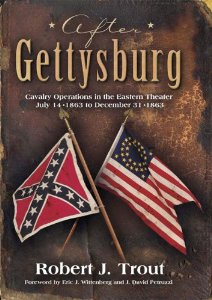
ImageI received this book for Christmas, but just read it recently.  I wasn’t sure what to expect, as I haven’t read Mr. Trout’s studies of Stuart’s staff and horse artillery, but all have been highly recommended.  After reading this book, I have ordered them.

In After Gettysburg, Robert Trout provides the first comprehensive and detailed look at the activities of the Army of the Potomac and the Army of Northern Virginia between the end of the Gettysburg campaign and the winter halt to campaigning for 1863.  Most books treat these activities with a few sentences between brief paragraphs on the Bristoe Station and Mine Run campaigns.  This is the first book to my knowledge to look at the actions from a campaign perspective.

Mr. Trout’s narrative skillfully blends primary and secondary sources to produce an engrossing tale.  This had not previously been a period of great interest to me, but I had a difficult time putting the book down.  I was very impressed by his ability to provide very detailed information consistently without bogging down his narrative with minutiae.  For those desiring more depth on the action as it unfolded, he provides very comprehensive endnotes that provide additional information and context in additional to source notations.

I was thrilled to at last see detailed maps of areas south of the Rappahannock, but had trouble following them at times.  This was partly an issue of transitioning between maps, and is likely a personal issue.  Certainly the 25 maps provide excellent opportunity for the reader to visualize the activities in the text.

Content aside, this is an absolutely beautiful book.  The publisher, Eagle Editions, Limited, produced a gem.  From cover art to page weight to binding it is a work of art.

I strongly recommend this book to anyone interested in the less publicized periods of the war and cavalry enthusiasts.  Given the author’s placing of context for the campaign, I think it could be enjoyed by anyone from a Civil War novice to a veteran researcher.

Birth of the Reserve Brigade, Part 3

24 Sunday Feb 2013

Posted by dccaughey in 1863, 2nd Cavalry, 5th Cavalry, 6th Cavalry, Reserve Brigade

≈ Leave a comment

Tags

2nd U.S. Cavalry, 5th U.S. Cavalry, 6th U.S. Cavalry, cavalry, Charles J. Whiting, Civil War, James Brisbin, James E. Harrison, Reserve Brigade

The 2nd U.S. Cavalry had the only field grade officer present with his regiment, Major Charles J. Whiting.  He led the famous charge of the 5th Cavalry at the battle of Gaines Mill the previous July as a captain. Seventeen other officers were present with the regiment, four captains and thirteen lieutenants.  Five of the thirteen were former enlisted men, a sergeant major, three first sergeants and a sergeant.  Ten of the regiment’s twelve companies were present at Falmouth with the brigade.  Company C was with Grant’s army at Memphis and Company M was still recruiting and training at Carlisle Barracks.  February’s muster rolls showed 556 men present for duty.

The 5th U.S. Cavalry was led by Captain James E. Harrison, another veteran.  Only 16 officers were present with the regiment, one other captain and 14 lieutenants.  Junior in rank, it may have been the most experienced group in the brigade.  Ten of the 14 were former soldiers in the regiment – a sergeant major, three quartermaster sergeants, five first sergeants and a sergeant.  Nominally all twelve companies were present with the regiment, but Companies L and M were not manned during the war and existed only on paper.  617 men were present for duty in February.

The 6th U.S. Cavalry was led by Captain James Brisbin, wounded at the first battle of Manassas and another veteran of the previous year’s campaigning.  The youngest of the four regiments, the 6th had served in every campaign with the Army of the Potomac, and was part of the army’s advance guard for much of the Peninsula campaign.  Brisbin was the sole captain present with the regiment this month.  Thirteen lieutenants led the regiment’s twelve companies, half of whom were enlisted soldiers prior to receiving their commissions.  The largest of the regiments as it had been since campaigning started, the 6th U.S. Cavalry mustered 817 men in February.

Newer posts →

Recent Posts

  • 5th U.S. Cavalry at the Stone Fence
  • Thomas Montgomery, 1st U.S. Cavalry
  • Thomas Corbett, 2nd US Cavalry
  • Charles W. Canfield, 2nd U.S. Cavalry
  • Michael Shaughnessy – 2nd U.S. Cavalry

Meta

  • Create account
  • Log in
  • Entries feed
  • Comments feed
  • WordPress.com

Blogs I Follow

  • Maine at War
  • Emerging Civil War
  • History Radar
  • A Meaningful Finale
  • The Task at Hand
  • Bull Runnings
  • Army at Wounded Knee
  • Crossroads
  • Campaigns of the U. S. Civil War
  • Irish in the American Civil War
  • To the Sound of the Guns
  • Daydreams of the Soul

Enter your email address to follow this blog and receive notifications of new posts by email.

Join 195 other subscribers

Regular Cavalry in the Civil War

Regular Cavalry in the Civil War

Buy a copy of my book!

From McFarland & Company or contact me directly.

Enter your email address to follow this blog and receive notifications of new posts by email.

Join 195 other subscribers

Don

dccaughey@aol.com
1-719-310-2427

Blog at WordPress.com.

Maine at War

Maine at War explores the Civil War as experienced by the men and women from Maine who lived during the tumultuous period.

Emerging Civil War

Providing fresh perspectives on America's defining event

History Radar

A Meaningful Finale

A 28-year Army veteran takes to the Appalachian Trail to contemplate a life well served & the road ahead

The Task at Hand

Powered by Human Intelligence

Bull Runnings

A Journal of the Digitization of a Civil War Battle

Army at Wounded Knee

A blog dedicated to documenting through primary sources, the Army's actions at Wounded Knee

Crossroads

Where history, scholarship, the academic life, and other stuff meet.

Campaigns of the U. S. Civil War

Campaigns of the U. S. Civil War

Irish in the American Civil War

Exploring Irish Emigration in the 19th Century United States

To the Sound of the Guns

Military History

Daydreams of the Soul

  • Subscribe Subscribed
    • Regular Cavalry in the Civil War
    • Join 65 other subscribers
    • Already have a WordPress.com account? Log in now.
    • Regular Cavalry in the Civil War
    • Subscribe Subscribed
    • Sign up
    • Log in
    • Report this content
    • View site in Reader
    • Manage subscriptions
    • Collapse this bar