• About

Regular Cavalry in the Civil War

Regular Cavalry in the Civil War

Tag Archives: cavalry

Thomas Corbett, 2nd US Cavalry

11 Tuesday Jun 2024

Posted by dccaughey in 1864, 2nd U.S. Cavalry, battle of Trevillian Station, cavalry, Civil War

≈ 1 Comment

Tags

2nd U.S. Cavalry, american-civil-war, cavalry, Civil War, family-history, history, research

Thomas Corbett was killed 160 years ago today, during the first day’s fighting at the battle of Trevilian Station.

Thomas was born in Tipperary, Ireland in 1837. He appears to have immigrated at the age of 13, with his father and an older sibling. They arrived in New Orleans on the Sea King on October 19, 1849 and eventually moved to Memphis, TN.

He and his wife, Margaret Feeney, were married at St Peter’s Church by Rev. T.L. Grace in Memphis on February 20, 1859. Their son John was born there on October 9, 1860. At some point in the next three years he moved to Cincinnati with his young family. They resided at No. 131 East 6th Street and he worked as a laborer.

Lieutenant Robert Smith enlisted him into Company A, 2nd US Cavalry in Cincinnati, OH on May 22, 1863. His enlistment documents describe him as 26 years old, 5’6″ tall, with hazel eyes, black hair, and a ruddy complexion. He does not appear to have served in a volunteer unit.

After his initial training at Carlisle Barracks, Thomas joined Company A on October 1st. He served with the regiment at Mitchell Station through the winter of 1863, rotating with others on the picket lines. He served in the opening battles of the Overland Campaign in May 1864 without incident or injury.

Thomas was shot in the head and killed during the first day’s fighting at Trevilian Station. Since the company’s commander, fellow Irishman First Lieutenant Michael Lawless, was killed the same day, there was no officer present with the company at the time. First Sergeant James A. Timmons wrote a letter to Margaret notifying her of Thomas’ death. Since Margaret could not read or write, someone had to read the letter to her. It must have been an even more devastating way to learn of her husband’s death.

“Camp 2nd US Cavalry

Near White House Landing Va

June 22nd 1864

Mrs. Corbitt

It is with regret I have to inform you that your husband Thomas Corbitt of Co. A, 2nd US Cavalry was killed on the 11th inst while engaged with enemy at Trevilian Station Va near Gordonsville. He was shot in the head. He did not speak after he was hit. I found on his person the old letter purporting to be from you which I enclose also a silver ring that was all he had about him. At the earliest opportunity I will send his papers to the Adjutant Genl Office Washington and you can get all that is coming to him. Any further information regarding him I will be happy to give.

I am very respectfully your obt svt

James Timmons

1st Sergt Co A 2nd US Cav”

Corbett was initially buried on the field and most likely later reinterred at Culpeper National Cemetery as an unknown soldier when it was established in 1867. Margaret filed a pension claim for herself and John, remaining at the same address in Cincinnati for several years. Later in life she moved to Chicago, where she died about 1903.

Michael Shaughnessy – 2nd U.S. Cavalry

09 Friday Feb 2024

Posted by dccaughey in 2nd Dragoons/ 2nd Cavalry, 2nd U.S. Cavalry, Gettysburg campaign

≈ 4 Comments

Tags

2nd U.S. Cavalry, american-civil-war, cavalry, Civil War, history, military, Reserve Brigade

Michael Shaughnessy was born in New York, NY about 1840. He enlisted in Company A, 2nd U.S. Cavalry by Captain Robertson at Fort Leavenworth, Kansas on August 7, 1861. His enlistment documents describe him as 5’11” tall, with gray eyes, brown hair and a fair complexion. He listed his occupation as laborer.

Private Shaughnessy remained at Fort Leavenworth awaiting the arrival his company, which had already been ordered east from Fort Kearny, Nebraska. It arrived November 22nd and reached Cantonment Holt near the Park Hotel in Washington, D.C. by rail on November 29th.

Shaughnessy spent the winter of 1861 with the rest of the regiment, drilling and performing provost guard duty in the city. In March 1862 they travelled to the peninsula with the rest of the Army of the Potomac. The regiment primarily served as the army headquarters and provost guard and did not see a great deal of action. In July 1862 the severely understrength regiment deactivated A, B and D companies consolidated its remaining soldiers in other companies. Shaughnessy and his fellow Co. A soldiers were transferred to Co. E on July 6th.  

Private Shaughnessy participated in Stoneman’s Raid and emerged unscathed from the battle of Brandy Station in June 1863. The regiment suffered nearly 25% casualties, but he was fortunate to not be one of them. He was not so lucky the following month in Pennsylvania.

Michael was one of the six members of the 2nd U.S. Cavalry captured during the fighting on South Cavalry Field on July 3, 1863 during the battle of Gettysburg. He was paroled in August, and remained at the parole camp in Annapolis, MD until April 1864. The most likely explanation for his long stay in Annapolis is that he was wounded. Otherwise the parole process should have taken nearly so long.

Shaughnessy served through the initial fighting of the Overland Campaign of 1864 without incident. He was wounded again, this time in the left leg, at Cold Harbor on May 30, 1864. He recovered more quickly from this wound, returning to the regiment in the Shenandoah in early August according to the monthly returns. Michael was discharged at the expiration of his term of service on August 7, 1864 at Harpers Ferry, VA.

Michael commissioned into Company G, 47th Illinois Infantry on March 9, 1865 as a first lieutenant at Rock Island, IL. A veteran regiment, it consolidated into four companies in November 1864 and recruited six new companies. Lieutenant Shaughnessy served with his new regiment until he mustered out on January 21, 1866. I found no indications of why he went to Illinois following his army service.

I was not able to definitively determine his activities following the war, as his was a very common name. There are records of one in Mississippi after he mustered out and another who was a federal marshal in Utah for a number of years. It is possible that they were the same person but I was unable to prove the connection. He filed an invalid pension on August 4, 1909 and died the following year.

Book Review: Small But Important Riots

09 Thursday Feb 2023

Posted by dccaughey in 1863, book reviews, Gettysburg campaign

≈ Leave a comment

Tags

cavalry, Civil War

Small But Important Riots: The Cavalry Battles of Aldie, Middleburg, and Upperville. Robert F. O’Neill. January 2023: Potomac Books, 360 pages.

This book provides a definitive account of five days of fighting in the Loudoun Valley during the Gettysburg campaign. O’Neill’s master work not only covers a multitude of engagements, but is able to link them all together coherently while maintaining each in its own context. His analysis includes the larger tactical picture and the intent of the commanders on both sides. The work not only examines the moves of Stuart, Pleasonton and Hooker, but the reasoning behind them that led to the engagements happening where and when they did. In Pleasonton’s case in particular, there are keen insights into why he employed his cavalry corps the way he did.

Small But Important Riots is so exhaustively researched that in some places I spent nearly as much time examining the notes as I did reading the text. The author weaves hundreds of personal accounts from soldiers on both sides together to compose his narrative, many of them previously unpublished.

The plentiful use of Julie Krick’s excellent maps makes it easy for the reader to follow and understand the numerous engagements spread over a large area. The appendices provide additional details concerning order of battle and unit losses. His final appendix on horses and ordnance is so well organized that it could be expanded into a book of its own.

This book should be on the shelf of anyone interested in Civil War cavalry or the Gettysburg campaign.

Levi Bailey Croy, 6th U.S. Cavalry

16 Monday Jan 2023

Posted by dccaughey in 6th U.S. Cavalry, Uncategorized

≈ Leave a comment

Tags

6th U.S. Cavalry, cavalry, Civil War

Photo courtesy of John Boggs, Jr.

Reader John Boggs, Jr. was kind enough to share this picture and letter of his ancestor. This is the first censored letter that I have seen from a regular soldier. A biographical sketch follows the letter. Levi Croy is mentioned numerous times in S.M. Davis’ Uncommon Soldier, Common War as well as in our book on the 6th U.S. Cavalry. I have preserved the letter’s original spelling and punctuation.

“Sixth U.S. Cavalry

Col. Emory Commanding

Letter No. 1, Aug. 2, 1862

My dear family; I rec’d yours of 27 of July, today. I had not rec’d any for so long I began to be uneasy. I was glad to learn of your health & sympathise with you very much in regard to your potatoes. I am very glad to hear you have a cow. Please let me know who of your neighbours was so kind. What did cow cost. I saw young Alexander today in the 10th Pa. reserves. He is well. Nite before last we had a nice spree the rebbels came down on the opposite side of the river & planted 6 or 8 guns & blazed away at our camps. I tell you they threw the shells & solid shot in fast. They had a cross fire on our camp & don no damage but kild one horse & riddled two tents not a man hurt the shell flew about 2 miles as far as the Pennsylvania reserves. A good many horses were kild in different camps but very few men. Our seage guns & gun boats got in action in a few minutes & made them skedaddle in short meetee. We have a heavy force (censored) river. Now I think (censored) no danger of another (censored). You asked when the war (censored). That is a question I am (censored) to answer but I am afraid be some time. However I think we will make a move before long I had made up my mind there would be nothing don this month. But it is my belief now we will haf to fight soon or give it up for a bad job but I believe if they let McClelan have his own way he will take Richmond & do it pretty easy. Pope is in the Shenandoey valley & I have more faith in him than all the others except McClelan he is the pet of the Army of the Potomac. Since writing the above our Regt has bin ordered out whare or for what purpos I don’t know. I am so bothered by diareahe that I have remaind in camp it is dark and I will quit for tonite. – Aug. 3rd a beautiful morn. Our Regt returned about 3 o’clock this morning was out mearly on a reconnaissance. All quiet so far as they went or seen. Our camps has not been disturbed since. I think there will be a move soon& I will be able to send the glad news to you that the Army of the Potomac is in Richmond. I am expecting our pay every day & as there is a chance to send the money by express I will wait a while & send you $25 at once it will cost the same.  I don’t think you receive all my letters so I have numbered this & will continue to no. them as I write. You do the same & still mention the no. of the ones you receive & I will do the same then we can tell if any is miscarried. I have asked you in several letters if you ever recd the letter containing the $5 in & have got no answer. I sent you a book most a month ago & put 2 post stamps on & was told by the P.M. it would go. I have asked you in 2 letters if it came to hand I have got no answer. I got the book at the Battle of Hanover Courthouse as it was taken by me from the nap sack of a fallen rebel & would be very interesting to the children also beneficial to them. I hope it has reached you safe. I recd the stamps and am much obliged for them. I am out again & would be glad if you could send me som more as they cant be had here only as friends sends them. I am glad to hear of Roberts situation what salery does he get. I think you try to get as small sheets of paper as possible & don’t fill them either. I understand there will be drafts made do you think Mercer Co. will rase its quota without. I hope so I would be very sorry to have my native place compeld to draft soldiers to protect its country. If Thomas wishes I will write him a scetch of the proceedings of the army so far as it has come under my my own observation for Publication. But I suppose he has plenty of others. Give my Respects to all the friends & tell Beccy Peirce I am obliged to her & when I com home I shal surely call for the chicken & I am sure if I had it here I would make quick havoc with a verry large one. I had some butter for supper last nite the first I have tasted for months. Please let me receive no. one letter soon. I remain your affectionate

Levi”

Levi Bailey Croy was born on May 16, 1826 in Butler County, Pennsylvania. He was the second son and fifth of seven children. His father was a merchant in Shenango, Pennsylvania in 1850, according to census data. Levi lived worked as a trader and lived with his parents. He married Jennie Irwin the same year and the two had four children prior to the outbreak of the Civil War.

Lieutenant Hancock McLean enlisted Levi into Company F, 6th U.S. Cavalry on July 3, 1861 in Pittsburgh. His enlistment documents describe him as 5’ 10” tall, with gray eyes, light hair and a fair complexion.

Levi served ably through the regiment’s initial campaigns, earning promotions to corporal and sergeant. He was captured at the battle of Fairfield and later imprisoned at Belle Isle. He was fortunate enough to be paroled in late September and was not sent to Andersonville like some of his companions. He returned to the regiment and continued to serve until the expiration of his term of service in the field on July 3, 1864.

Levi returned to his family in Pennsylvania. According to census data, by 1870 he worked as an engineer at oil wells in Venango County. The family now included six children, and they added a seventh before the 1880 census. By 1880 the family settled near the city of Beaver in Clarion County, where Levi worked as a farmer.

Levi Bailey Croy died on August 8, 1880 at the age of 54. He is buried in St. Paul’s Union Cemetery, Beaver, Clarion County. Pennsylvania.

1862 in Review – 1st U.S. Cavalry

01 Sunday Jan 2023

Posted by dccaughey in 1862, 1st U.S. Cavalry, battle of Gaines Mill, battle of Valverde, Hanover Court House

≈ Leave a comment

Tags

1st U.S. Cavalry, cavalry

I spent a lot of time with the 1st U.S. Cavalry this year, so it only seems fitting to highlight their year 160 years ago. They are the only regular regiment of the Reserve Brigade without a published history, so I have been cobbling one together for them.

January found the majority of the regiment finally closing on Camp Sprague in Washington, D.C. Companies A, B, F and K arrived in December. By January 19th, Companies C and E arrived on the steam ship Sonora and Companies H and I on the steamship Light. The regiment’s field and staff was at its full strength of 4 officers and 14 enlisted men. The 8 line companies included 9 officers and 344 enlisted men, an average of 43 per company. Companies D and G remained in New Mexico, with no officers present and 49 ad 54 enlisted men respectively. Unbeknownst to the rest of the regiment, First Sergeants Reuben Bernard of Company D and William Pennock of Company G were appointed acting second lieutenants by Brigadier General George Crook on January 5th. Desperately short of officers, he was forced to appoint his own until they could be approved by the War Department. The two companies served as his escort in January, then functioned as a squadron when active campaigning began the following month.

On February 1st Colonel Benjamin Beall retired. Colonel George A. H. Blake succeeded him, and almost immediately departed to command the 2nd Brigade of the Cavalry Reserve. Lt. Col. William N. Grier assumed command of the regiment. An experienced cavalryman and Mexican War veteran brevetted for gallantry, Grier had served in the regiment since his graduation from West Point in 1831.

In February the majority of the regiment drilled at Camp Sprague when they were not performing provost guard duty.  

Companies D and G skirmished near Fort Craig, NM on February 19th and fought in the battle of Valverde on February 21st. The Confederates killed Private William Monroe of Company D and wounded 2 men of Company D and 7 men of Company G . The two companies fought at the battle of Glorietta Pass neat Santa Fe in late March, but suffered no casualties.

The regiment departed Camp Sprague in groups during the month of March, consolidating again in a camp near Alexandria at the end of the month. The companies boarded schooners and arrived at Hampton, Virginia on April 3rd. After a week at Kentucky Farm, they established camp with the rest of the Cavalry Reserve at Ship Point on the York River. On April 24th they moved to Camp Winfield Scott, on Cheeseman’s Creek closer to Yorktown.

At Williamsburg, May 4, 1862, the 1st and 6th U.S. Cavalry fought in a skirmish outside of Williamsburg. The 1st U.S. served as support for Capt. Gibson’s Company C, 3rd U.S. Artillery, positioned in marshy ground. After orders to withdraw, one gun and several caissons mired in the mud. Hoping to capture the materiel, the Confederate cavalry charged. The trail squadron, commanded by Captain Benjamin F. Davis, wheeled about by fours and countercharged. They captured a regimental standard and a captain in the hand to hand fighting. Lt. Col. Grier was slightly wounded, and the regiment lost 13 men. Several weeks of scouting and picket duty followed.

Prior to the battle of Hanover Court House on May 27th, the 1st U.S. Cavalry gathered the following intelligence for the advancing Union infantry:

“My advance guard drove in the enemy’s pickets to within about 3 miles of Hanover Court House. One of the pickets wounded and taken prisoner. All white persons and negroes I found were questioned with regard to the movements of the enemy and their strength at or near Hanover Court House. The results of my examination of them was to the effect there are several regiments stationed at or near Hanover Court House, artillery, cavalry, and infantry. General Branch is said to be in command. I am inclined to think that 5,000 or 6,000 is, as yet, the maximum number of troops stationed there. “

During General Stuart’s ride around the Army of the Potomac in mid June, the regiment participated in the Union forces’ unsuccessful pursuit. The Confederates destroyed the regimental supply train under Lieutenant Joseph Hoyer near Garlick’s Landing, but did not capture any of the escort.

On June 27th, the regiment participated in the battle of Gaines Mill.  They were shifted to multiple positions, frequently while under artillery fire. Lt. Col. Grier’s report included the following description of the regiment:

“The whole strength of the regiment on that day consisted of two small squadrons, about 125 enlisted men, Captain Reno, First Cavalry, commanding one squadron, and Lieutenant Kellogg commanding the other. During the day the regiment was kept moving from one point to another until in the afternoon it was placed, together with the Fifth U.S. Cavalry and Rush’s Lancers, on the extreme left, in the support of our artillery.”

Since the Fifth U.S. Cavalry’s charge failed to disrupt the Confederate attack. The regiment “withdrew in good order at a walk in rear of our artillery.” The regiment lost 26 men over the course of the day, including Lieutenant Robert Allen, Jr. He died on July 27th from complications following the amputation of his leg.

After the army shifted operations to the James River, the 1st U.S. Cavalry operated from a camp near Harrison’s Landing. The months of June and July consisted of escort, provost guard and picket duty.

In July, the regiment’s rapidly decreasing manpower prompted Lt. Col. Grier to recommend breaking up some or all of the regiment.

“Sir,

I respectfully desire to call your attention to the accompanying statement of the present strength of the 1st Regiment of U.S. Cavalry and its further reductio in numbers (by reason of discharge for expiration of service)by the 25th of September next. And that the Regiment may be kept up with a reasonable prospect of efficiency (as to numbers) I would respectfully urge, first, that the available privates now serving with the Army of the Potomac be transferred to another regiment (the 5th or 6th) and the officers and non commissioned officers be sent on the recruiting service, or, secondly, that four of the eight companies be broken up and the privates transferred to fill up the other four companies, and the officers and noncommissioned officers of the companies thus broken up be sent on the recruiting service.”

Decision on the recommendation went all the way to General McClellan, who selected the second option. The privates of companies A, E, F and K, were redistributed among the other companies, bringing their average strength to 74. Company F was completely dissolved. The 21 noncommissioned officers of the other three companies travelled to Carlisle Barracks to recruit and reconstitute the companies. Sick with dysentery, Lt. Col. Grier accompanied them. He never returned to the regiment. The remaining two squadrons were assigned to escort duty at Headquarters, Army of the Potomac, command shifting amongst the four officers present for duty. A number of new officers were appointed in late July, many from the regiment’s enlisted ranks, but they had not yet joined.

As the Army of the Potomac withdrew from the peninsula, the 1st U.S. Cavalry comprised part of the screen under the command of Major Alfred Pleasonton to cover the movement. Among the last regiments to depart from Fortress Monroe in August, the regiment missed the battle of Second Manassas. They functioned as the army’s quartermaster guard during the Antietam campaign.   

The regiment, like all the regular cavalry regiments, benefitted greatly from Adjutant General Order No. 154, which permitted soldiers to transfer from volunteer regiments to regular units. Hundreds of soldiers from volunteer units, especially those who suffered heavy casualties at Antietam, flocked to recruiting officers from regular cavalry and artillery units. Unfortunately, these men initially served in dismounted camps to learn the cavalry trade and were not available for duty.

In October, the regiment, mustering only 120 sabers, participated in a reconnaissance in force to Charlestown, West Virginia. They skirmished with Col. Thomas Munford’s brigade of Confederate cavalry there on the 16th, suffering no casualties. They remained in the vicinity of Harpers Ferry for the rest of the month. Companies D and G remained in New Mexico.

November saw the regiment establish a camp near Falmouth with the rest of the Army of the Potomac. The regiment played no significant role in the battle of Fredericksburg, and the camp remained their home throughout the winter. Average company strength in the field was 60 men. Recruiting continued at Carlisle Barracks for the four disbanded companies. Company A, now 80 men strong, began its journey to rejoin the regiment in late December.

The 1st U.S. Cavalry ended the year with a two-day reconnaissance under General William W. Averell to Morrisville, checking Richards’ and Ellis’ Fords along the Rappahannock River. They would see much more of those fords over the course of the winter.

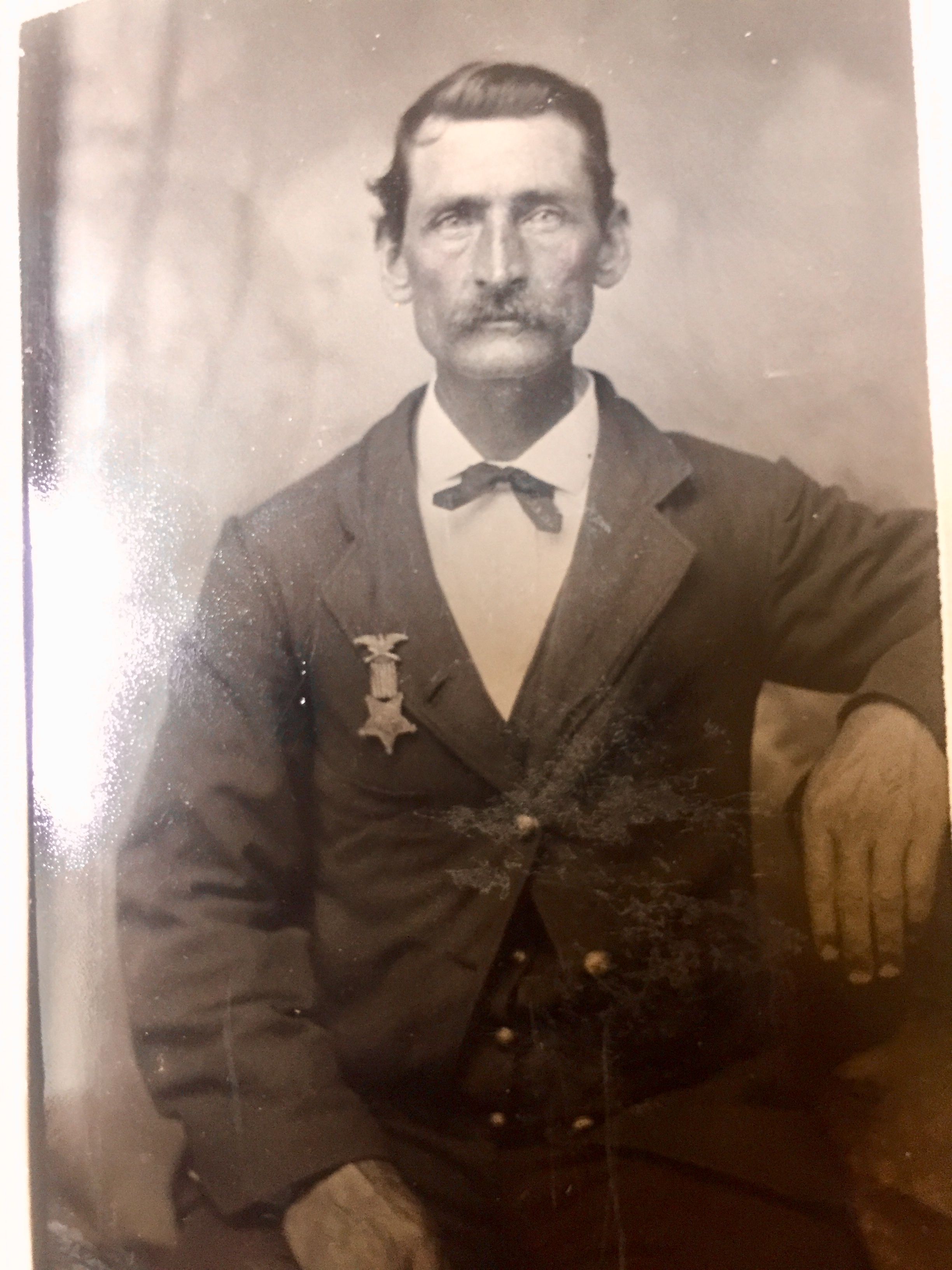
Leroy S. Elbert, 3rd U.S. Cavalry

07 Wednesday Dec 2022

Posted by dccaughey in 3rd U.S. Cavalry, Civil War, officers, Regiment of Mounted Rifles

≈ Leave a comment

Tags

3rd U.S. Cavalry, cavalry, Civil War

Leroy S. Elbert was born in Logan County, Ohio on September 4, 1837. His parents moved to Iowa early in his childhood. His father, a prominent doctor, convinced Senator Andrew Hall to nominate Leroy to West Point from Iowa in January 1857. Leroy joined his class there on July 1, 1857.

Elbert graduated  near the bottom of the June class of 1861, only six places ahead of George Custer . He was assigned to the Regiment of Mounted Rifles as a brevet second lieutenant upon graduation, all vacancies in the regiment being full at the Adjutant General’s office. Due to the chaos caused by so many officers resigning and declining appointments, however, he was promoted very rapidly. By the time the smoke cleared with General Order #62 from the Adjutant General’s Office in August, Leroy received his appointment, promoted to second lieutenant in Company L and first lieutenant in Company E effective the day of his graduation, June 24, 1861. Over two years would pass before he joined his regiment.  

First Lieutenant Elbert remained very active in the meantime. Since his regiment was in New Mexico, Leroy hurried directly to Washington, D.C. immediately after graduation like most of his class. He participated in the Manassas campaign and worked through the winter of 1862 drilling troops and seeking a staff position. Since his company was disbanded following the surrender at San Augustine Springs, he saw no compelling need to join his regiment in New Mexico and had no orders to do so.  

He initially applied in January 1862 to serve as an aide de camp to Brigadier General Curtis in St Louis. Despite an endorsement from President Lincoln, this request was denied by Major General McClellan and the Adjutant General’s Office because regular officers were not permitted to serve as aides for generals of volunteers. He served with Captain William P. Chambliss’ squadron of the 5th U.S. Cavalry during the siege of Yorktown and battle of Williamsburg. At the battle of Hanover Court House he served on Brigadier General Emory’s staff as an acting aide de camp. He later served on the staff of Brigadier General Alfred Pleasonton in the same capacity during the Maryland campaign from September to November 1862.

He transferred to the Artillery Reserve of the Army of the Potomac before the battle of Fredericksburg. Placed in charge of the ammunition, First Lieutenant Elbert provided nearly 5,000 rounds to the batteries on the army’s right. Brigadier General Hunt cited his performance in his report on the battle.

During the spring of 1863, Major General Stoneman selected him for the staff of the Cavalry Corps. He served here as an aide de camp through Stoneman’s Raid and the beginning of the Gettysburg campaign. On June 27th, word of his promotion caught up to him. Promoted to Captain of Company G, 3rd U.S. Cavalry on March 11, 1863, he was ordered to immediately join his regiment in the western theater.

Captain Elbert joined his company at Camp McRae, near Memphis, Tennessee. He served there until September, when he became ill with typhoid fever. The regimental commander, Captain George W. Howland, granted him sick leave to go home to Iowa and recover on September 11th. He didn’t make it home.

Captain Leroy S. Elbert died on the steamboat “City of Alton” on September 13, 1863 while en route to St Louis. Captain Samuel Gilbert of the 2nd Iowa Cavalry was with him and sent his body and belongings home from St Louis. He is buried in Oak Lawn Cemetery, Keosauqua, Van Buren County, Iowa.

Fiddler’s Green: Michael Lawless

15 Friday Oct 2021

Posted by dccaughey in 2nd Dragoons/ 2nd Cavalry, 2nd U.S. Cavalry, battle of Brandy Station, battle of Trevillian Station

≈ Leave a comment

Tags

2nd U.S. Cavalry, cavalry, Civil War, officers, Reserve Brigade

Michael Lawless was born in Waterford, Ireland about 1826. He appears to have emigrated from Galway in 1849 on the brig Clarence with his older sister “Biddy” (Bridget?). He listed his occupation as farmer on the passenger list. They arrived in New York on February 10, 1849, and moved to Boston shortly thereafter.

On December 4, 1849, Michael was enlisted into Company I, 1st Dragoons by Lieutenant Charles Jordan. His enlistment documents describe him as 5’7″ tall, with black hair, hazel eyes and a dark complexion. Lawless was working as a laborer at the time of his enlistment. He left the Army at the end of his enlistment on December 4, 1854 as a private at Fort Thorn, NM.

He soon rejoined the Army, enlisting in Company H of the 2nd Dragoons in St Louis, MO on March 13, 1855. This is roughly the amount of time it would have taken him to travel east on the Santa Fe Trail as a civilian from Fort Thorn. Lawless was more successful this enlistment, with promotions to corporal and sergeant. He re-enlisted into the same company on January 13, 1860 at Camp Floyd, Utah Territory. His company commander was Captain Alfred Pleasonton.

Sergeant Lawless accompanied his regiment on its march east at the outbreak of the Civil War, reaching Cantonment Holt in Washington, D.C. by the end of 1861. He served ably in the company during the campaign on the peninsula, rising to the rank of first sergeant by the summer of 1862. On July 19, 1862, he, the regimental sergeant major and several other first sergeants were recommended for commissions by regimental commander Major Alfred Pleasonton through the provost marshal of the Army of the Potomac.

Lawless was promoted to second lieutenant in the same company on July 17, 1862. Interestingly, this was two days before the date of Pleasonton’s recommendation. Due to the pace of operations within the army that summer, he didn’t learn of his promotion until September, just after the battle of Antietam. He accepted his commission on September 23, 1862 at the regiment’s camp near Sharpsburg, MD. There must have been quite a party in the camp that evening, as the sergeant major, quartermaster sergeant and three first sergeants were all notified of their appointments the same day.

Lieutenant Lawless served with Company H through the remainder of the 1862 campaigns, as well as Stoneman’s Raid. He fought well at Brandy Station, where he was one of the few officers of the 2nd Cavalry not killed or wounded. Indeed, he was the only one of the five officers he was commissioned with not to be wounded in the battle. He was promoted to first lieutenant in Company A after the battle, with a date of rank of June 9, 1863. He fought with this company for the rest of the year, frequently commanding it in the absence of its assigned captain.

First Lieutenant Lawless opened the 1864 campaign once again commanding Company A. He led it during the fighting at Todd’s Tavern, Sheridan’s “first raid,” and Old Church. in command of the company. The regimental commander cited him as “distinguished for his personal intrepidity in action and other good qualities as a soldier” during the fighting.

On June 11, 1864, during the opening phase of the battle of Trevillian Station, Lieutenant Lawless was killed while leading his company. In his report on the battle, Brigadier General Wesley Merritt said of him, “he was a fearless, honest, and eminently trustworthy soldier, ‘God’s truth’ being the standard by which he measured all of his actions.”

Originally buried on the battlefield, Lawless was later moved to Culpeper National Cemetery. He appears not to have had a next of kin, as I found no record of a pension claim.

Court Martial Insights

21 Tuesday Apr 2020

Posted by dccaughey in 1864, 2nd U.S. Cavalry, Civil War, courts martial, references, research, Reserve Brigade, Uncategorized

≈ Leave a comment

Tags

2nd U.S. Cavalry, cavalry, Civil War, courts martial, Culpeper;, officers, winter encampment;

Court martialI first realized the possible value of court martial records when I read Dr. Mark W. Johnson’s excellent book, That Body of Brave Men. Intrigued by what he had to say about the value of the records, I did a bit of investigating.

As I perused the War Department’s General Orders for 1863 and 1864, it struck me that relatively few cavalrymen were court martialed, and even fewer regular cavalrymen. I was able to make copies of a few records on a couple of visits to the National Archives, and friend Bob O’Neill was kind enough to copy another dozen or more. Much to my delight, there is a wealth of information in these files. Nothing book worthy in and of itself, but countless smaller details that bring the larger history to life.

As a case study, let’s take a look at the court martial of Second Lieutenant Peter Rinner of the 2nd U.S. Cavalry in January 1864. Rinner was a veteran whose enlisted service started in the Mexican War, and a first sergeant in the regiment when he was commissioned the year before. I will save the other details of his service for a future post. The charge was drunk on guard. The specification was “while on Provost Guard with his squadron did become so drunk as to be unable to perform his duty as an officer. This at or near the town of Culpeper, Va. On or about the 24th day of December 1863.”

To set the stage a bit, during the winter encampment of 1863-1864 the regular cavalry regiments and possibly others rotated on provost guard duty in the town of Culpeper, Virginia. Without going into the details of the testimony, here is a sampling some of the information I discovered from just this one record.

  • A squadron strong, the guard rotated shifts daily. The squadron was responsible for guard posts in town and pickets in vicinity of the town.
  • The headquarters for the squadron on provost guard was a room in the Virginia Hotel. The officers on guard, typically a captain and two lieutenants, slept together in this room.
  • It was not customary for there to be a formal mounting of the guard when the relief happened within the regiment. Guard posts included the hotel, the Orange & Alexandria railroad depot, and “the church.” This was probably St. Stephen’s Episcopal Church, built in 1821. Specific identification of guards’ names, ranks and companies validated unit roster.
  • Battery G, 2nd U.S. Artillery was located in Culpeper, and its commander, Lt. William N. Dennison, also had a room at the Virginia Hotel. One of the units of the Horse Artillery Brigade, relations between the officers of the battery and the 2nd U.S. Cavalry were cordial enough that there was a party in Dennison’s room on December 23rd which seven officers attended.
  • It was permissible for an officer of the guard to visit a party, drink and play cards as long as his duties were fulfilled and he did not become incapacitated. In this case his squadron commander was present at the time and it was not considered an offense.
  • Company morning report books were required to be signed by commanders every morning, even when the officer was on guard.
  • The regimental adjutant placed officers in arrest, not the company or squadron commander.
  • Division headquarters appointed general courts martial. Brigade headquarters selected the board members selected from the regiments of the accused’s brigade. Both volunteer and regular officers could sit on the court martial of a regular officer. Court martial duty superseded all other duties, including unit movements. The proceedings of the previous day were read to the accused and the court first thing in the morning after the court convened.
  • The 1st New York Dragoons had already joined the Reserve Brigade before the Christmas of 1863.
  • Justice was swift. The court reached its verdict on January 11th. Only two days later, the proceedings were approved by the division commander and sent to Major General Sedgwick, in temporary command of the Army of the Potomac.
  • The Army of the Potomac was cracking down on professionalism during the winter encampment. By February 18th, army headquarters had already published four general court martial orders since January 1st. Each order encompassed the results of multiple courts. This fourth order included four courts ruling on ten officers for various forms of misconduct. All ten were cashiered.

Not every court martial record contains valuable information, but this is definitely a largely underutilized source of primary source material. Another tool available to bring pieces of history to light.

Source: NARA, Record Group 153: Office of the Judge Advocate General. Folder LL1362: Court-Martial of Second Lieutenant Peter Rinner, 2nd U.S. Cavalry, January 1864.

Yellowstone and the Cavalry

08 Monday Jul 2019

Posted by dccaughey in 1st U.S. Cavalry, 3rd U.S. Cavalry, 4th U.S. Cavalry, 5th U.S. Cavalry, 6th U.S. Cavalry, 7th U.S. Cavalry, cavalry, Uncategorized

≈ Leave a comment

Tags

1st U.S. Cavalry, cavalry, Fort Yellowstone, Moses Harris, Yellowstone National Park

As many of my friends are aware, I made my first visit to Yellowstone National Park a few weeks ago in the company of our Boy Scout troop. While I thoroughly enjoyed the scenic beauty and wildlife of the park, I dimly remembered something about Moses Harris, one of the cavalry regiments, and the parks. Cell and internet service being very sketchy at best in the area, I resolved to look into it when I returned.

yellow1
yellow2
Yellow3

Lest one think this simply another manifestation of my determination to find a connection of Civil War cavalry with anything I happen to run across, I will first direct the reader to this article on the Yellowstone NPS webpage, entitled “How The U.S. Cavalry Saved Our National Parks” .

If the name Moses Harris sounds familiar, it should. An enlisted man in the 4th U.S. Cavalry and officer in the 1st U.S. Cavalry during the Civil War, I have previously written about him here. I came across several new items while researching his Yellowstone connections, so there will be an updated biographical sketch of him posted here in the near future.

Yellowstone National Park was established in 1872, one of the original national parks. As such, there was no inherent program for the administration of the park and the protection of its resources. Civilian superintendents were appointed, but with little instruction or resources to carry out their mandate to protect the park and its treasures. Consequently, the park was under constant threat from those who wanted to exploit its resources. This varied from souvenir hunters and poachers to tourist facilities in and around the geysers and hot springs.

In 1886 the problem came to a head when Congress refused to appropriate additional funds to administer the park. The Secretary of the Interior turned to the Secretary of War for assistance. In August, Captain Moses Harris and the 50 men of his Company M, 1st U.S. Cavalry were ordered from Fort Custer, Montana to the park.

Here is Captain Harris’ account of his time at Yellowstone:

“In August 1886 Captain Harris was ordered to take station with his troop in the Yellowstone National Park relieving the civilian superintendent, and was ordered to report to the Secretary of the Interior for instructions relative to the protection of the Park. Having so reported was directed to perform the duties which had previously been performed by the superintendent of the Park and his assistants. He remained at this station with his troop performing the civil duties of the superintendent of the National Park, and with his troop giving the Park full and efficient protection until June 1889, when he was ordered to take station at Fort Custer. It is proper in connection to state that the reports of the Secretary of the Interior for the years 1887, 1888, and 1889 contain expressions of satisfaction at the efficient manner in which the duty of protecting the park had been performed and its interests cared for during the tour of duty in the Park of Captain Harris and his command.”

For those interested, one of Captain Harris’ annual reports to the Secretary of the Interior can be found here. 

At first, the soldiers lived in temporary frame buildings at what was initially called Camp Sheridan at the foot of the Mammoth Hot Springs Terraces. After five cold, harsh winters, the Army realized there was no end in sight to this assignment and requested funds from Congress for a permanent post. These funds were granted in 1890, and the post renamed Fort Yellowstone.

The first buildings of Fort Yellowstone were finished by late 1891, though Company M had been replaced by a different company by then. An almost identical set of wooden buildings was finished in 1897 to house a second troop. In 1909, sandstone buildings were constructed, increasing the fort’s capacity to four troops (approximately 400 men). The stone for these buildings was obtained from a local quarry. At its height in 1910, over 300 soldiers manned the park between the fort and outlying posts.

In 1916, the National Park Service was created and assumed control of the park. After a brief return the following year, the Army departed the park for the final time in 1918. Fort Yellowstone became the administrative center of the park for the new organization. Over the 32 years of its tenure, troops from 10 different cavalry regiments served in the park: the 1st, 3rd, 4th, 5th, 6th, 7th, 8th, 11th and 13th U.S. Cavalry Regiments.

Ironically, I didn’t get to see Fort Yellowstone while I was in the park. Maybe on my next visit.

Fairfield Dead – William Mottern

04 Thursday Jul 2019

Posted by dccaughey in 1863, 6th U.S. Cavalry, battle of Fairfield, Casualties, cavalry, Civil War

≈ Leave a comment

Tags

6th US Cavalry, battle of Fairfield, cavalry, Civil War

156 years ago yesterday, the 6th U.S. Cavalry had its biggest fight of the war a few short miles from Gettysburg, outside the small town of Fairfield, Pennsylvania. The understrength regiment had a brief fight with an entire brigade of Confederate cavalry which did not go well for the bluecoats. Among the dead from the battle was Private William Mottern of Company H.
William Mottern was born in Berks County, Pennsylvania in 1833. Prior to the Civil War he worked as a boatman. He enlisted into Company H on August 12, 1861 at Philadelphia, Pennsylvania. His enlistment documents describe him a 5’ 6 ½” tall, with light hair, blue eyes, and a fair complexion.
Private Mottern served in the regiment’s “flank squadron,” the only squadron equipped with carbines until after the battle of Antietam. On July 3, 1863, his company was partnered with Company C under 2nd Lieutenant and former first sergeant Joseph Bould as the regiment’s reserve. When the Confederate cavalry broke the through the regiment’s thin defensive line, Bould countercharged to stem the attack. Priavte Mottern was killed in the melee.
Private William Mottern is buried alongside his regimental comrades in the cemetery at Gettysburg.

DSCN0123

← Older posts

Recent Posts

  • 5th U.S. Cavalry at the Stone Fence
  • Thomas Montgomery, 1st U.S. Cavalry
  • Thomas Corbett, 2nd US Cavalry
  • Charles W. Canfield, 2nd U.S. Cavalry
  • Michael Shaughnessy – 2nd U.S. Cavalry

Meta

  • Create account
  • Log in
  • Entries feed
  • Comments feed
  • WordPress.com

Blogs I Follow

  • Maine at War
  • Emerging Civil War
  • History Radar
  • A Meaningful Finale
  • The Task at Hand
  • Bull Runnings
  • Army at Wounded Knee
  • Crossroads
  • Campaigns of the U. S. Civil War
  • Irish in the American Civil War
  • To the Sound of the Guns
  • Daydreams of the Soul

Enter your email address to follow this blog and receive notifications of new posts by email.

Join 195 other subscribers

Regular Cavalry in the Civil War

Regular Cavalry in the Civil War

Buy a copy of my book!

From McFarland & Company or contact me directly.

Enter your email address to follow this blog and receive notifications of new posts by email.

Join 195 other subscribers

Don

dccaughey@aol.com
1-719-310-2427

Blog at WordPress.com.

Maine at War

Maine at War explores the Civil War as experienced by the men and women from Maine who lived during the tumultuous period.

Emerging Civil War

Providing fresh perspectives on America's defining event

History Radar

A Meaningful Finale

A 28-year Army veteran takes to the Appalachian Trail to contemplate a life well served & the road ahead

The Task at Hand

Powered by Human Intelligence

Bull Runnings

A Journal of the Digitization of a Civil War Battle

Army at Wounded Knee

A blog dedicated to documenting through primary sources, the Army's actions at Wounded Knee

Crossroads

Where history, scholarship, the academic life, and other stuff meet.

Campaigns of the U. S. Civil War

Campaigns of the U. S. Civil War

Irish in the American Civil War

Exploring Irish Emigration in the 19th Century United States

To the Sound of the Guns

Military History

Daydreams of the Soul

  • Subscribe Subscribed
    • Regular Cavalry in the Civil War
    • Join 65 other subscribers
    • Already have a WordPress.com account? Log in now.
    • Regular Cavalry in the Civil War
    • Subscribe Subscribed
    • Sign up
    • Log in
    • Report this content
    • View site in Reader
    • Manage subscriptions
    • Collapse this bar
 

Loading Comments...