• About

Regular Cavalry in the Civil War

Regular Cavalry in the Civil War

Category Archives: Fiddler’s Green

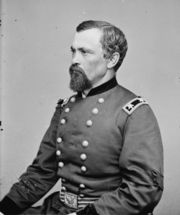
Fiddler’s Green – Joseph H. Taylor

19 Tuesday Feb 2008

Posted by dccaughey in 6th Cavalry, Fiddler's Green

≈ 2 Comments

Joseph Hancock Taylor was born on January 26, 1836, in Kentucky. His father was Joseph P. Taylor, Commisary General of Subsistence for the U.S. Army during the Civil War. His uncle was President Zachary Taylor, his father’s brother. With such illustrious forebearers it was doubtless no surprise when he was appointed to West Point from Maryland in 1852. He graduated 31st in the class on 1856.

Upon graduation, Taylor was assigned as a brevet second lieutenant to the 1st U.S. Cavalry on July 1, 1856, but didn’t immediately join his regiment. He served at the Cavalry School for Practice, Carlisle, Pennsylvania from 1856 to 1857. He was promoted to Second Lieutenant in the 1st Cavalry while at Carlisle on January 16, 1857. He joined his regiment later in what would be a very busy year for both he and the regiment. After quelling Kansas disturbances and escorting the commissioner for running the southern boundary of Kansas, he spent the remainder of the year conducting other scouting from Fort Leavenworth. By the end of the year, the regiment was stationed at Fort Riley, Kansas.

The remaining years before the outbreak of the Civil War were spent crisscrossing the frontier. Taylor participated in the Utah expedition in 1858, returning to first Fort Leavenworth, then Fort Riley later in the year. 1859 brought a march to the Arkansas River. Taylor’s 1860 began with a march conducting recruits to Texas, then expeditions against Kiowa and Comanche Indians. He was engaged near Bent’s Fort, Colorado on July 11, 1860 with his company. They remained in the vicinity after the skirmish, one of the four companies who constructed and dwelt in Fort Wise, Colorado under Major John Sedgwick that winter.

At the outbreak of the Civil War, Taylor’s company was one of those immediately ordered east. They marched first to Leavenworth, then to Washington. Taylor was promoted to First Lieutenant in his regiment on April 22, 1861.

Three weeks later he was promoted again, this time to Captain in the newly-forming 3rd U.S. Cavalry on May 14, 1861. The regiment was redesignated the 6th U.S. Cavalry on August 3rd, and he took command of Company F on August 22, 1861. He remained with the company through their training and marches to first Bladensburg, Maryland and then Camp East of the Capitol, Washington.

One of the privates in his company, Sidney Morris Davis, left his impression of his first commanding officer in his memoirs. He described Captain Taylor as “a small-waisted, slightly built, cross-looking man, with a voice that astonished us — so fierce, and sounding so like the yelp of a bull-dog when he gave us orders on drill. Although our first impression of Captain Taylor was not assuring, yet time showed he was one of the kindest officers in the service.”

Taylor remained with the regiment until late November, 1861. He left his company on November 27, 1861 to serve as an acting assistant Adjutant General for General Edwin V. Sumner’s Division. This assignment isn’t too surprising when one considers that Sumner had been his regimental commander in the 1st Cavalry. He remained on General Sumner’s staff until March 14, 1862, when he was assigned as the acting assistant Adjutant General of the Second Corps, Army of the Potomac. He served with the Second Corps in this role throughout the Peninsula battles, earning a brevet to Major of volunteers on June 1, 1862 for gallant and meritorious service in the battle of Fair Oaks.

After a month’s sick leave of absence from June 24th to July 24th, he returned to his position with the Second Corps. He was promoted to Lieutenant Colonel, Staff, of Volunteers on August 20, 1862, and earned a brevet to Lieutenant Colonel, U.S.A., on September 17, 1862 for gallant and meritorious service in battle of Antietam. He remained with Second Corps until November 1862, when he was assigned as the assistant Adjutant General for the Right Grand Division. After the battle of Fredericksburg, he returned to the cavalry, albeit still as a staff officer.
He served as the Assistant Inspector General of Cavalry during Stoneman’s Raid, from April 29 to May 8, 1863. Following the raid, he was reassigned as an assistant Adjutant General for the Department of Washington on June 1, 1863, where he served the remainder of the war.

Joseph Taylor married Mary Montgomery Meigs, the daughter of Quartermaster General Montgomery C. Meigs, in Washington on March 30, 1864. He received a brevet to Colonel of Volunteers on March 3, 1865 for faithful and meritorious service during the war March 3, 1865. Interestingly, he was wasn’t one of the many who received brevet promotions on March 13, 1865. Taylor was promoted to Major, Staff, Assistant Adjutant General, Regular Army on March 30, 1866. He was breveted Colonel, U.S. Army August 13, 1866 for faithful and meritorious service during the war.

On May 24, 1869, Major Taylor left Washington at last, serving as the Assistant Adjutant General (AAG), Department of the South, until December 6, 1873. He then served as the AAG, Department of Texas (January 30, 1874 to February 4, 1878), the AAG, Department of the East (February 11, 1878 to March 31, 1879), the AAG, Department of the South (April 1, 1879 to September 1, 1882), and the AAG, Department of the Platte.

Taylor was still serving with this last department when died due to an unnamed disease that he contracted in the line of duty in Omaha, Nebraska on March 13, 1885. He is buried with his wife at Arlington National Cemetery.

Sources:
Cullum, Biographical Register of the Officers and Graduates of the US Military Academy, pgs 660-661.
Davis, Sidney Morris. Common Soldier, Uncommon War, pgs 25-26
Heitman, pg 947
Powell, Records of Living Officers of the U.S. Army

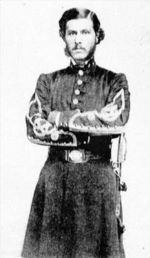
Fiddler’s Green: Samuel M. Whitside

24 Thursday Jan 2008

Posted by dccaughey in 6th Cavalry, Fiddler's Green

≈ 1 Comment


Samuel Whitside was another 6th Cavalry alumnus who progressed from private to general over the course of his career. In the interest of brevity, I have focused this account primarily on his Civil War service. For those interested in learning more about Whitside, I would strongly recommend Samuel Russell’s thesis in the reference section.

Samuel Marmaduke Whitside was born on January 9, 1839 in Toronto, Canada, and grew up in that area. The family later moved to New York, where he attended Careyville Academy and worked briefly as a bookkeeper.

He enlisted into the General Mounted Service on November 10, 1858 at age 19. In the army at this time, there were enlisted positions available in the mounted service outside of the regiments, primarily at the cavalry training school at Carlisle Barracks, Pennsylvania. He served for three years at Carlisle Barracks, attaining the rank of corporal. His duties there included caring for cavalry mounts and instructing recruits in basic riding and weapons skills before they were assigned to mounted regiments.

Corporal Whitside was assigned to the newly-forming 3rd U.S. Cavalry on July 27, 1861 to fill a vacant noncommissioned officer position. He apparently excelled in his new assignment, as he was promoted to sergeant major of the regiment on August 1 at the tender age of 22. Three months later he was offered a commission, and was commissioned as a second lieutenant in the 6th Cavalry on November 4, 1861. He was initially assigned to Company K, where his commander was captain (later brigadier general) Charles Russell Lowell. Among his soldiers in Company K was one Adna R. Chaffee, a future Chief of Staff of the Army.

Lieutenant Whitside helped train his company, and served with it throughout the Peninsula campaign. He was commended for his conduct during a skirmish at Slatersville on May 9th, his second engagement. He fought with his company in all of the regiment’s engagements on the Peninsula, including Malvern Hill, which was to be the last time that he led troops into battle during the war. Following Malvern Hill, he served briefly on the staff of General McClellan as an aide de camp before becoming ill. While the nature of his illness isn’t known, he was on sick leave for more than a month before reporting to General Banks in Washington, D.C.

In September 1862 he was assigned to the staff of Brigadier General Nathaniel P. Banks as an aide de camp, the junior of seven assigned to that position. Shortly thereafter Banks was assigned to the command of the Department of the Gulf, and moved with his staff to Louisiana. Whitside served in the operations before Port Hudson and during the Red River Campaign in Louisiana in 1863. He again became ill and was reassigned to the Military District of Washington on July 2, 1863.

Due to his illness, Whitside was assigned to light duty as an aide de camp to General Martindale, commander of the Military District of Washington. His condition worsened, and he was declared unfit for duty on October 5, 1863. Whitside refused to accept a medical discharge, however, and eventually fully returned to duty. A month later, on November 10th, he was diagnosed with smallpox, and placed on sick leave from November 14, 1863 to January 26, 1864. While he was able to return to duty in January, the fact that he was once again assigned as an aide and did not return to his regiment likely indicates that he was not yet fully recovered.

Whitside was promoted to first lieutenant in the 6th Cavalry on January 25, 1864. He was assigned as an aide de camp to Major General Alfred Pleasonton the following day, four days after he was relieved of command of the Cavalry Corps, Army of the Potomac. Pleasonton was reinstated on February 12th, and Whitside continued to serve as his aide until March 11th, when he was again assigned to Washington D.C for medical treatment. He was subsequently reassigned in April 1864 as a mustering and disbursing officer in Providence, Rhode Island, where he served until February 1865.

He was brevetted captain and major, regular army, for faithful and meritorious service during the war on March 13, 1865. Following the surrender at Appomattox, he served as the Chief Commissary of Musters, Army of the Shenandoah, overseeing the mustering out of over 30,000 men.

Whitside returned to service with the 6th Cavalry in Maryland in September 1865, where he was assigned to Company A. He was promoted to captain and command of Company B on October 20, 1866. Samuel Whitside married Carrie McGavock on November 24, 1868, in Bejar County, Texas.

Whitside served for the next twenty years with the regiment on the frontier, including stints in Texas, Missouri, Kansas, Colorado and the Arizona and Dakota Territories. He founded the post of Fort Huachuca, Arizona Territory in March of 1877, and served as the post commander until 1881. Today Fort Huachuca is the home of the U.S. Army’s Military Intelligence Center and School.

After almost twenty four years with the 6th Cavalry, Whitside was promoted to major in the 7th Cavalry on March 20, 1885. He served with the regiment in the Dakota Territory until 1887, when the regiment moved to Fort Riley, Kansas. He was promoted to lieutenant colonel in the 3rd Cavalry on July 17, 1895, and transferred to the 5th Cavalry on October 15th of the same year. He was promoted to the colonelcy of the 10th Cavalry Regiment on October 16, 1898.

Colonel Whitside was promoted to brigadier general of volunteers on January 3, 1901, during the Spanish-American war. He was honorably discharged from volunteer service six months later, on June 20th.

He was promoted to brigadier general in the regular army on May 29, 1902, and retired at his own request eleven days later on June 9, 1902.

Samuel Whitside died in Washington D.C. on December 14, 1904, on his way home following a congressional inspection of the proposed route for the Panama Canal. He was buried with full military honors at Arlington National Cemetery.

Sources:

Carter, W. W., From Yorktown to Santiago with the 6th U.S. Cavalry (Baltimore, the Lord Baltimore Press, 1900).

Coffman, Edward M. The Old Army: A Portrait of the American Army in Peacetime, 1784-1898 (New York: Oxford University press, 1986).

Heitman, Francis B. Historical Register and Dictionary of the United States Army (Washington: Government Printing Office, 1903), page 1031.

Henry, Guy V. Military Record of Army and Civilian Appointments in the United States Army, Volume II (New York: D. Van Nostrand Publsihing, 1873), pg 219.

Russell, Major Samuel L., “Selfless Service: The Cavalry Career of Brigadier General Samuel M. Whitside from 1858 to 1902.” MMAS Thesis, Fort Leavenworth: U.S. Command and General Staff College, 2002.

6th US Cavalry Muster Rolls, NARA

Fiddler’s Green: Francis C. Armstrong

27 Thursday Dec 2007

Posted by dccaughey in Fiddler's Green

≈ 2 Comments

Frank Armstrong is one of the unusual few soldiers who had the distinction of leading both Union and Confederate troops into battle during the war.

Francis Crawford Armstrong was born on November 22, 1835, at the Choctaw Agency near Scullyville, Indian Territory. His father, Frank W. Armstrong, was an Army officer serving at the agency until his death during Frank’s childhood. His mother remarried soon after, to General Persifor Smith, a Mexican War veteran. He was educated at Holy Cross Academy in Worcester, Massachusetts, enrolling in his studies on January 19, 1845.

Frank accompanied his stepfather on a military tour of Texas in 1854. During an encounter with hostile Indians in New Mexico Territory near El Paso, Frank so distinguished himself that he was awarded a direct commission into the Army upon his graduation from Holy Cross the following year.

Frank Armstrong was appointed a second lieutenant in the 2nd U.S. Dragoons from Texas on June 7, 1855. He was initially assigned to Fort Riley, Kansas, where he served until June, 1857. He later served at Fort Leavenworth and on the Utah expedition until August 1858. Armstrong was promoted to first lieutenant, 2nd Dragoons on March 9, 1859. After a brief leave of absence, he was assigned to Fort Kearny as the aide-de-camp to General Harney until May 1861. Armstrong was promoted to captain, 2nd Dragoons, a month later on June 6th.

Captain Armstrong commanded Company K, 2nd U.S. Dragoons during the first Battle of Bull Run, and was attached to Colonel Hunter’s division. Disillusioned following the battle, he resigned on August 13, 1861 and enlisted in the Confederate Army.

Armstrong served initially as an assistant adjutant general on the staff of General Ben McCulloch until he was killed at the Battle of Pea Ridge. Promoted shortly thereafter to Major, he then served briefly on the staff of General James McIntosh. Armstrong was elected Colonel of the 3rd Louisiana Infantry, but served very briefly with them before he was given command of General Sterling Price’s cavalry.

He effectively covered Confederate retreats following defeats at Iuka and Corinth at the end of 1862, and was promoted to brigadier general in the Confederate Army on January 30, 1863.

He served through the majority of 1863 under General Nathan B. Forrest, effectively leading his brigade. He commanded a dismounted cavalry division under Forrest with distinction at the battle of Chickamauga. “The charges made by Armstrong’s brigades while fighting on foot would be creditable to the best drilled infantry,” said Forrest in his report on the battle.

In February 1864, Armstrong requested a transfer to the command of Stephen D. Lee, and was assigned command of a brigade of Mississippi cavalry. This brigade consisted of the 1st, 2nd, 28th and Ballentyne’s Mississippi cavalry regiments, and served under Armstong’s command until the end of the war.

Armstrong’s brigade was very active during the Atlanta campaign, then afterwards during Hood’s Tennessee campaign. He led much of Forrest’s rear guard during the army’s long retreat from its disastrous defeat at Nashville.

His last battle of the war was at Selma, Alabama on April 2, 1865. His hopelessly outnumbered command was overwhelmed by Union cavalry under General James H. Wilson. Armstrong escaped after the battle and later surrendered in Macon, Georgia.

After the war, Armstrong worked with the Overland Mail Service in Texas. He was later a U.S. Indian Inspector from 1885 to 1889, and served as an Assistant Commissioner of Indian Affairs from 1893 to 1895.

Frank Armstrong died at his daughter’s summer home in Bar Harbor, Maine after a long illness on September 8, 1909. He is buried in Rock Creek Cemetery, Washington, D.C.

Sources:

Evans, Clement, ed. Confederate Military History, Volume VIII, (Atlanta: Confederate Publishing Company, 1899)

Evans, David. Sherman’s Horsemen. (Bloomington: Indiana University Press, 1999)

Foreman, Carolyn Thomas. “The Armstrongs of Indian Territory” in Chronicles of Oklahoma, Volume 31 (http://digital.library.okstate.edu/Chronicles/v031/v031p056.pdf)

Heitman, Francis B. Historical Register and Dictionary of the United States Army (Washington: Government Printing Office, 1903), page 292.

Rodenbough, Theophilus F. From Everglade to Canyon with the Second United States Cavalry (New York: D. Van Nostrand, 1875)

Warner, Ezra. Generals in Gray. (Baton Rouge: Louisiana State University Press, 1959), pages 12-13.

Fiddler’s Green: George P. Myers

02 Friday Nov 2007

Posted by dccaughey in Fiddler's Green

≈ Leave a comment

I am deeply indebted to two descendants of George Myers, Kimberly Branagan and Ola Myers Eikrem, for sharing his pension records and other information that made this entry possible. This all too rare glimpse into the life of a regular cavalry enlisted man would not have been possible without their assistance. Hopefully I have done their diligent research work justice.

George P. Myers was born in Canada on May 9, 1835. His father, Phillip, was born in Ireland and his mother, Margaret Smith, was born in New Brunswick. The family immigrated to the United States in 1846, settling near Rochester, New York.

He enlisted as a private in Captain Irvin Gregg’s Company G, 6th US Cavalry on August 13, 1861 in Rochester, New York. His enlistment documents describe him as a 26 year old laborer, 5’6” tall, with light hair, gray eyes, and a fair complexion. He was not able to write, and made his mark on his enlistment documents.

George Myers served through the first two years of the war without incident. He was briefly listed as “missing on Stoneman’s Raid” on the April 1863 muster rolls, but was again present for duty the following month. It is quite likely that like many troopers on this raid, his horse went lame during the raid and he had to make his own way back to Union lines.

Such good fortune did not last through his regiment’s fateful engagement at Fairfield, Pennsylvania on July 3, 1863. Myers was captured during the engagement, and moved by foot and rail through the Shenandoah Valley to Richmond. He was confined at Belle Isle Prison in Richmond on July 21, 1863. Myers was paroled at City Point, Virginia on December 28, 1863, and moved by boat to Camp Parole, Maryland, near Annapolis. The regimental muster rolls list him as “joined from missing in action January 7, 1864.” He was so weakened by malnutrition at the time of his release that he was nearly blind and had to be physically led off of the steamboat, according to Patrick Cullen, who had enlisted with him in the same company in Rochester and met his boat at City Point. He remained at Camp Parole for several months recovering from his ordeal before he was sent to the Cavalry Corps’ “Dismounted Camp, Va” on May 13, 1864. The documents are vague, but this was probably the cavalry depot at Giesborough Point. He continued to serve until he was honorably discharged at the expiration of his enlistment on August 13, 1864.

Health issues from his imprisonment continued to plague Myers, though he was able to continue to serve in the Army. An account from a fellow private in Company G states that Myers had to be relieved from picket duty as soon as the sun went down because he couldn’t see in the dark. He described him as having bad eyesight, with eyes that were red and inflamed, “caused by moon-blindness.”

The term ‘moon-blind’ surfaces again and again in Myers’ pension records. The term generally refers to a horse disorder. It is an inflammation of the vascular structures of the eye. It is called moon blindness because of the recurring nature of the disease that was once thought to coincide with the phases of the moon. The actual medical term for the condition is Equine recurrent uveitis, or ERU. ERU is thought to be an immune-mediated disease process that can be triggered by many different causes. The weakening of Myers’ immunity system due to malnutrition would certainly have made him more vulnerable to the disease. Each episode is usually painful, and characterized by red and inflamed eyes with excessive tearing and sometimes light sensitivity or photophobia. Quiescent stages, when the eye seems normal and the disease in remission, may last from weeks to months before another episode occurs. Unfortunately, each attack of ERU leads to more damage to the eye and eventually blindness develops.

Like many soldiers of the Regular Army during the late summer of 1864, Myers was given the opportunity to return home and reenlist in the state of his choice. He returned home and reenlisted for three years in Rochester, New York. He changed companies, and was reenlisted by Second Lieutenant T.W. Simson into Company F, 6th US Cavalry on September 12, 1864. He again didn’t sign, but made his mark. His enlistment was credited to the town of Sweden, Monroe County, 28th Congressional District of New York. After a brief furlough, he rejoined his regiment by November.

Myers served with his regiment through the remainder of the war with little incident. He was promoted to corporal in Company F on February 21, 1865. He apparently didn’t desire to continue his service after the war ended and the regiment was dispatched to service in Texas. The regimental muster rolls list him as “Deserted Aug 8, ‘65, a private.” The date of his reduction from corporal to private has been lost. His records were later amended to read, “discharged May 17, 1890, to date August 8, 1865, by order of the Secretary of War, and by reason of desertion, a private.”

After leaving the army, Myers returned home to Brockport, New York where he lived the remainder of his life working alternately as a farmer and a street laborer, according to census records. He married Anna S. Woods on October 25, 1866 at Clarkson Corners, Monroe County, New York. She was born in County Cavan, Ireland on May 5, 1850, and had immigrated to the United States the year before.

George Myers’ health declined drastically after the war, most likely as a result of his wartime imprisonment. He petitioned for a pension on several occasions, with statements from fellow members of Company G who knew him before and after his time in prison. Joseph O’Connor described him as a “sound, healthy man” before he was taken prisoner, and called him “deaf and ‘moon blind’” afterwards. He initially had difficulties receiving a pension for disability, and was forced to provide numerous statements from relatives and former comrades in arms to verify his health problems and when they happened. One of the factors responsible for his difficulties was that Myers was apparently a hard worker who didn’t complain. Despite the difficulties with his eyes, he was far from a malingerer and didn’t show in any of the muster rolls as absent because of sickness. This lack of evidence of disability in his service records made it more difficult to obtain his pension.

George P. Myers died of tuberculosis in Brockport, New York on October 30, 1915. He was buried the next day in Brockport Cemetery, Sweden Township, Brockport, Monroe County, New York. He was survived by his wife and six children.

Fiddler’s Green: Moses Harris

19 Friday Oct 2007

Posted by dccaughey in Fiddler's Green

≈ 2 Comments

Thanks to Chris Swift for posting about Harris last week and bringing this post back to mind.

Moses Harris was born in Andover, New Hampshire on September 6, 1839. He enlisted in Company G, 1st Cavalry Regiment from New Hampshire in 1857, which became the 4th Cavalry Regiment in August 1861. He served in the company as a private, corporal and sergeant in the western theater until 1864.

He was appointed a second lieutenant in the 1st Cavalry Regiment on May 18, 1864, and moved to the eastern theater to join his regiment. Harris was promoted to first lieutenant in the same regiment on August 15, 1864, assuming command of a company.

Two weeks later, during an engagement at Smithfield, West Virginia, Harris was serving as the second in command of the regiment’s reserve squadron under the command of a Captain Hoyer. The squadron of approximately 150 troopers was ordered to charge a Confederate cavalry brigade that had broken through the line. Captain Hoyer was mortally wounded during the approach, so Lieutenant Harris assumed command and ordered the charge in a column of fours. His squadron broke and routed the Confederate brigade. Harris was later awarded the Medal of Honor on January 23, 1896 “for most distinguished gallantry in action at Smithfield, West Virginia, August 28, a864, where in an attack on a largely superior force his personal gallantry was so conspicuous as to inspire the men to extraordinary effort resulting in the complete rout of the enemy.”

A month later, Lieutenant Harris was brevetted captain on September 19, 1864 “for gallant and meritorious service in the battle of Winchester, Virginia.” His squadron had stubbornly resisted the advance of Confederate General Early’s troops after the VI Corps broke during the early phases of the battle.

Moses Harris remained in service after the war, and was promoted to captain in the 1st Cavalry on June 20, 1872. His post-war experiences were somewhat different than those of many of his peers.

On August 13, 1886, Captain Harris received an unusual order. He was ordered by General Sheridan himself to take his cavalry troop to Yellowstone National Park and assume command of the park from the departing civilian superintendent and his staff. He was charged to protect and administer the park. Elements of the cavalry remained in the park for the next 32 years.

Harris arrived at Mammoth Hot Springs on August 20 at the head of his column. Troop M, 1st Cavalry consisted of himself, two lieutenants, twenty enlisted men, 56 horses, 17 mules, three wagons, and an ambulance. His first order was to combat a wildfire burning nearby. His second was to begin the construction of Fort Sheridan (later renamed Fort Yellowstone) between Mammoth Hot Springs and the Gardiner River.

After his service in Yellowstone, Harris penned two articles for the Journal of the United States Cavalry Association that contain valuable information for Civil War cavalry researchers. With The Reserve Brigade, in 1890 and 1891, was a four part series that covered the service of the Reserve Brigade from July 1864 through Appomatox in detail. The Union Cavalry, published in 1892, is a shorter, more general work covering cavalry service during the entire war.

Moses Harris was promoted to major in the 8th Cavalry Regiment on July 22, 1892. He was retired at his own request on March 7, 1893.

Fiddler’s Green: Innis Palmer

12 Thursday Apr 2007

Posted by dccaughey in Fiddler's Green

≈ 2 Comments

Innis Newton Palmer was born on March 30, 1824, in Buffalo, New York. He was appointed to West Point from New York in 1842. He graduated 38th in the class on 1846 which also produced future leaders such as George B. McClellan, Thomas J. Jackson, and George E. Pickett.

Upon graduation, Palmer was assigned as a brevet second lieutenant in the Regiment of Mounted Rifles on July 1, 1846. He joined his regiment at Jefferson Barracks, Missouri, on October 29, 1846, and departed with them in December for service in the Mexican War. He was promoted to second lieutenant in the same regiment on July 20, 1847. During the war, he participated in the siege of Vera Cruz, battles of Cerro Gordo, Contreras, Churubusco, Chapultepec, and the capture of Mexico City. He was brevetted first lieutenant in August 1847 for gallant and meritorious conduct in the battles of Contreras and Churubusco. On September 13, 1847, he was brevetted captain for gallant conduct at Chapultepec, where he was severely wounded. He commanded Company B of the police force in Mexico City from December 18, 1847 to June 5, 1848 before returning with his regiment to Jefferson Barracks in July 1848.

Palmer served as the acting regimental adjutant from November 25, 1848 to March 25, 1849, when he was assigned to regimental recruiting service at St Louis. He returned to his regiment at Camp Sumner near Fort Leavenworth in time for its march to Oregon City, arriving there in mid-October. He again served as acting regimental adjutant from October 14, 1849 to May 1, 1850, primarily at Oregon City and Fort Vancouver, then held the actual position until 1854. He and the regiment were back at Jefferson Barracks in 1851. From 1852 to 1854, the regiment participated in Indian campaigns in Texas, assigned at various times to Forts Inge, Ewell and Merrill. He was promoted to first lieutenant January 27, 1853. Palmer was once again on recruiting duty, this time in Baltimore, when he learned that he’d been appointed to the newly organized 2nd Cavalry.

When the 2nd Cavalry was authorized in 1855, Palmer became one of its captains, with a date of rank of March 3, 1855. He joined the regiment at Jefferson Barracks on August 27, 1855 and served in command of Company D. Once the regiment was filled, he marched with the regiment to Texas, arriving at Fort Mason on January 14, 1856. He served there until July, when he and his company were assigned to Camp Verde, about 60 miles northwest of San Antonio. This wasn’t just any frontier post, as it was also home to the camel experiment conducted under Secretary of War Jefferson Davis. Other than an expedition to the headwaters of the Brazos and Colorado rivers in January and February 1858, Palmer remained in command of Camp Verde until May 1858.

He assembled with his company and the rest of the regiment at Fort Belknap in June 1858 for a march to Utah, but the order was revoked. The regiment dispersed to its various forts and camps, but Palmer remained at Fort Belknap until January 1859. He was ordered to Washington and assigned to special duty from January to May 1859 before receiving a leave of absence to visit Europe. He returned to duty in October of 1860, and conducted a detachment of recruits from depots to Texas before rejoining his company at Camp Cooper on January 5, 1861.

Texas seceded very soon after this, and the regiment began its exodus from the state. Palmer started with his company from Camp Cooper on February 21, 1861, and marched to Green Lake. He was joined there by five other companies of the regiment, which formed the first detachment to leave the state. Palmer assumed command of the battalion and moved it to the port of Indianola, a small port 120 miles south of Galveston. They embarked there on a steamship and arrived in New York harbor on April 11, 1861. He proceeded to Washington immediately with his squadron of Companies D and H, where he was employed guarding the Treasury buildings and assisting with the city’s defenses.

Palmer succeeded to a majority in the regiment two weeks later, on April 25, 1861. He commanded the battalion of Regular Cavalry in the campaign of First Manassas, and was brevetted lieutenant colonel for gallant and meritorious services during the Bull Run campaign. Following the battle, he served on a board convened at Washington for examination of officers reported as unable to perform field service in August 1861. He commanded the regiment in the defenses of Washington from August 28 to September 26, 1861. Palmer was appointed a brigadier general of volunteers on September 23, 1861, and continued to serve in the defenses of Washington until March 1862.

During the Peninsula campaign, he commanded a brigade of infantry in Couch’s division of Keyes’ IV Corps, fighting at the siege of Yorktown, Williamsburg, Seven Pines, Glendale and Malvern Hill. Later that autumn, he organized and forwarded regiments of New Jersey and Delaware volunteers, as well as supervising camps of drafted men at Philadelphia.

From December 1862 until the end of the war he was assigned to various duties in the state of North Carolina. These included at various times command of a division of XVIII Corps, the corps itself, the New Bern defenses, the District of Beaufort, and the Department and District of North Carolina. He was promoted to lieutenant colonel of the 2nd Cavalry in December 1863. In March 1865, he participated in the movements of Sherman’s army with his command, and was engaged at Kinston.

In March 1865 he was awarded all the brevet ranks through brigadier general in the Regular Army for “gallant and meritorious service in the field during the war” and major general of volunteers for long and meritorious service. He mustered out of volunteer service on January 15, 1866, and joined his regiment at Fort Ellsworth, Kansas on May 21. He commanded the regiment from May to September, and then took a leave of absence until December. He rejoined the regiment at Fort Laramie, Wyoming, and commanded it from January to August 1867 and again from November 1867 to July 1868.

In 1868, he succeeded to the colonelcy of the 2nd Cavalry, and he spent the remainder of his career on the frontier in what is now Wyoming and Nebraska. He also served on several cavalry boards, including boards for cavalry tactics in 1868, cavalry equipment in 1874, and a new cavalry cartridge in 1875.

Palmer took a leave of absence due to illness from 1876 to 1879, and retired from the Army at his own request on March 20, 1879. Although engaged for a time in civil pursuits in Denver, he spent the majority of the remainder of his life near Washington. Innis Palmer died in Chevy Chase, Maryland on September 9, 1900. He is buried in Arlington National Cemetery.

Fiddler’s Green: August V. Kautz

18 Sunday Mar 2007

Posted by dccaughey in Fiddler's Green

≈ Leave a comment

August Valentine Kautz was born on January 5, 1828, in Ispringen, Baden, Germany. His parents immigrated to the United States the same year, and settled in Brown County, Ohio in 1832.

He enlisted as a private in the First Regiment of Ohio Volunteers at the outbreak of the Mexican War, and served in this regiment throughout the war. He received an appointment to the United States Military Academy upon his return, and graduated in 1852. He was assigned to the 4th Infantry Regiment as a second lieutenant upon graduation.

He served with the 4th Infantry in the Washington and Oregon territories during the 1850s, where he was twice wounded during engagements with Indians during the Snake River and Rogue River campaigns. He was promoted to first lieutenant in the 4th Infantry in 1855. In July of 1857, he attempted an ascent of Mount Rainier with a party of four soldiers, an Indian guide and the post doctor of Fort Bellingham. They were forced to turn back before reaching the summit. He was commended during this same year for gallantry by General Scott. Kautz traveled in Europe during 1859 and 1860, returning prior to the outbreak of the Civil War.

Kautz was appointed a captain in the 6th US Cavalry when that unit formed in 1861. He served with the unit from its formation through the Peninsula Campaign, commanding it during the Seven Days Battles.

On September 2, 1862, Kautz was appointed colonel of the 2nd Ohio Cavalry Regiment, and transferred to the western theater of operations just before the battle of South Mountain. His regiment took part in the capture of Monticello, Kentucky on May 1, 1863, and he was brevetted major in the regular army for actions near that location on the 9th of June. The 2nd Ohio was also engaged in the pursuit and capture of Confederate General John Hunt Morgan in July 1863, preventing him from escaping across the Ohio River. He served under the command of Major General Ambrose Burnside during the Knoxville campaign of September to December 1863.

He returned to the eastern theater in 1864, where he initially served as the assistant chief of the Cavalry Bureau to Brigadier General James H. Wilson. He very briefly served as chief of the bureau when Wilson departed to the Army of the Potomac in April, before receiving new orders himself. He commanded the cavalry division of the Army of the James between April and June 1864, and was appointed brigadier general of volunteers on May 7. Kautz entered Petersburg briefly with his command on June 9, 1864, for which he was brevetted lieutenant colonel.

His command led the advance during the Wilson raid in late June 1864 to destroy track on the two railroads leading into Petersburg from the south. Although the raid caused a great deal of damage, its perpetrators suffered greatly as well. Eventually cut off and surrounded, Kautz and Wilson lost nearly a third of their force as casualties and prisoners before returning to Union lines.

He was brevetted brigadier general in the regular army on March 13, 1865 and assumed command of a division of colored troops, First Division, XXV Corps. He marched them into Richmond April 3rd. His command was active in the pursuit of Lee’s army until the surrender at Appomattox Court House. He was also brevetted brigadier and major general of the Regular Army or gallant and meritorious service in the field during the war.

When President Lincoln was assassinated, President Andrew Johnson ordered the formation of a military commission to try the accused conspirators. Kautz served as one of the nine officers assigned to the commission until they reached their verdict on June 29, 1865. In July 1865 he briefly served as the military governor of New Orleans to quell rioting there before returning to the western states.

Kautz served the remainder of the career in the southwestern United States. He was appointed lieutenant colonel of the 14th Infantry in 1867, and transferred to the 15th Infantry in 1869. He commanded this regiment on the New Mexico frontier until 1874, establishing the Mescalero Apaches on their reservation from 1870 to1871. In June 1874 he was promoted to colonel of the 8th Infantry, and was placed in command of the Department of Arizona in 1875. He served in California from 1878 to 1886, and in Nebraska from 1887 until his retirement.

Kautz retired from the army in 1892 and moved to Seattle, Washington. He lived there until his death on September 4, 1895, and is buried in Arlington National Cemetery.

He published several books on army duties and customs during and immediately after the Civil War. These included The Company Clerk (1863), Customs of Service for Non-commissioned Officers and Soldiers (1864), and Customs of Service for Officers (1866).
Newer posts →

Recent Posts

  • 5th U.S. Cavalry at the Stone Fence
  • Thomas Montgomery, 1st U.S. Cavalry
  • Thomas Corbett, 2nd US Cavalry
  • Charles W. Canfield, 2nd U.S. Cavalry
  • Michael Shaughnessy – 2nd U.S. Cavalry

Meta

  • Create account
  • Log in
  • Entries feed
  • Comments feed
  • WordPress.com

Blogs I Follow

  • Maine at War
  • Emerging Civil War
  • History Radar
  • A Meaningful Finale
  • The Task at Hand
  • Bull Runnings
  • Army at Wounded Knee
  • Crossroads
  • Campaigns of the U. S. Civil War
  • Irish in the American Civil War
  • To the Sound of the Guns
  • Daydreams of the Soul

Enter your email address to follow this blog and receive notifications of new posts by email.

Join 195 other subscribers

Regular Cavalry in the Civil War

Regular Cavalry in the Civil War

Buy a copy of my book!

From McFarland & Company or contact me directly.

Enter your email address to follow this blog and receive notifications of new posts by email.

Join 195 other subscribers

Don

dccaughey@aol.com
1-719-310-2427

Blog at WordPress.com.

Maine at War

Maine at War explores the Civil War as experienced by the men and women from Maine who lived during the tumultuous period.

Emerging Civil War

Providing fresh perspectives on America's defining event

History Radar

A Meaningful Finale

A 28-year Army veteran takes to the Appalachian Trail to contemplate a life well served & the road ahead

The Task at Hand

Powered by Human Intelligence

Bull Runnings

A Journal of the Digitization of a Civil War Battle

Army at Wounded Knee

A blog dedicated to documenting through primary sources, the Army's actions at Wounded Knee

Crossroads

Where history, scholarship, the academic life, and other stuff meet.

Campaigns of the U. S. Civil War

Campaigns of the U. S. Civil War

Irish in the American Civil War

Exploring Irish Emigration in the 19th Century United States

To the Sound of the Guns

Military History

Daydreams of the Soul

  • Subscribe Subscribed
    • Regular Cavalry in the Civil War
    • Join 65 other subscribers
    • Already have a WordPress.com account? Log in now.
    • Regular Cavalry in the Civil War
    • Subscribe Subscribed
    • Sign up
    • Log in
    • Report this content
    • View site in Reader
    • Manage subscriptions
    • Collapse this bar